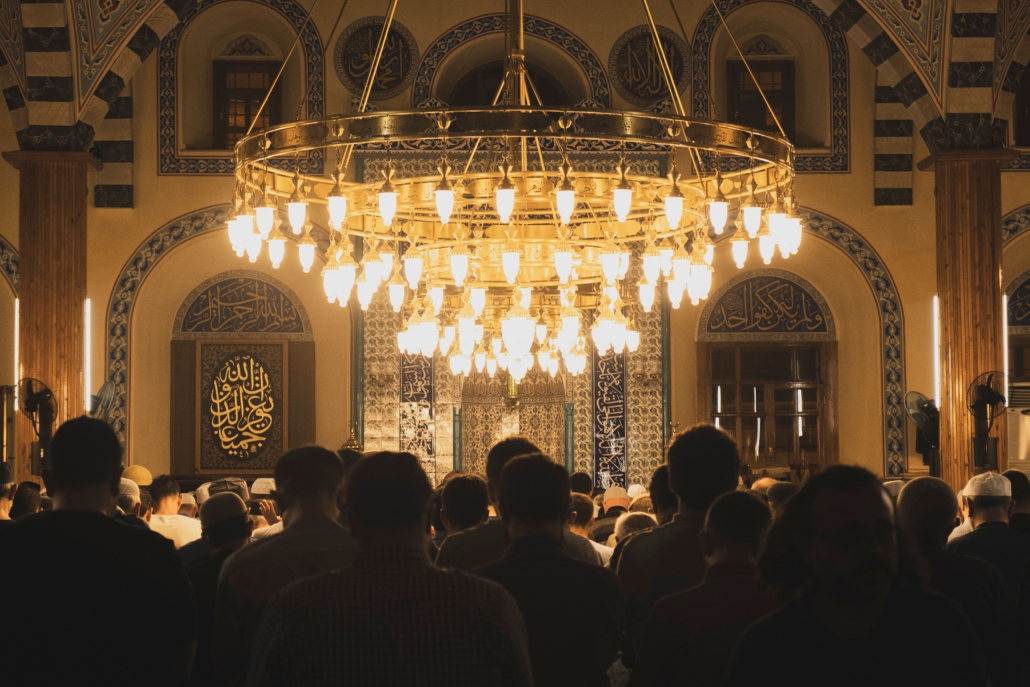
Is My Prayer Valid behind an Imam Whose Creed I Don’t Know?
Shafi'i Fiqh
Answered by Shaykh Irshaad Sedick
Question
If one lives in an area that is predominantly kufr in aqida, and there’s a masjid with an imam whose creed is unknown, is prayer behind him valid?
Answer
In the Name of Allah, the Most Merciful and Compassionate.
May Allah reward you for your care over your prayer.
Yes, your prayer behind him is valid, and you don’t need to investigate his beliefs before you follow him. A man who leads Muslims in prayer in a mosque (masjid) is treated as a Muslim, and the Shafiʿi school counts his leading the prayer as outward evidence of his Islam.
The Imam Is Presumed to Be Muslim
Imam Shafiʿi (Allah have mercy on him) states in al-Umm, as Imam Nawawi (Allah have mercy on him) records, that those who pray behind someone whose Islam they do not know need not repeat their prayer. The same holds if they are unsure whether he is Muslim, because his stepping forward to lead them is outward evidence of his Islam. [Nawawi, al-Majmuʿ] Imam Ibn Hajar Haytami (Allah have mercy on him) likewise states that following an imam whose Islam is unknown is valid unless the opposite becomes clear. [Ibn Hajar Haytami, Tuhfat al-Muhtaj]
The Messenger of Allah (Allah bless him and give him peace) said, “Whoever prays our prayer, faces our qibla, and eats what we slaughter is the Muslim who has the protection of Allah and the protection of His Messenger, so do not betray Allah in His protection.” [Bukhari] He also said of those who lead the prayer, “They pray for you: if they get it right, it is for you, and if they err, it is for you and against them.” [Bukhari]
Disagreement in Creed Is Not the Same as Disbelief
Many beliefs people loosely call disbelief (kufr) are errors or innovations that don’t take a person out of Islam. Imam Nawawi states that prayer behind an innovator whose innovation doesn’t amount to disbelief is valid, though disliked, and that the earlier and later generations kept praying behind such groups, marrying them, and treating them as Muslims in every legal ruling. [Nawawi, al-Majmuʿ] He calls this position the correct one.
Declaring a specific person a disbeliever is a grave matter. The Prophet (Allah bless him and give him peace) said, “If a man says to his brother, ‘O disbeliever,’ it returns to one of them.” [Bukhari] So the general state of an area, or what you have heard about its people, doesn’t settle anything about the man leading the prayer.
When Prayer behind Him Would Not Be Valid
If you know with certainty that this particular imam holds a belief that is disbelief by agreement, such as ascribing a body to Allah in explicit terms [Nawawi, al-Majmuʿ; Nawawi, Rawdat al-Talibin], or denying the finality of prophethood, then you may not follow him in prayer. And if you learn this only after you have prayed, you must repeat those prayers. Imam Nawawi rules in the Minhaj that disbelief the imam kept hidden takes the same ruling as disbelief he made known, which is the position of most of the school’s scholars. [Nawawi, Minhaj al-Talibin]
Suspicion, rumor, or the reputation of the area is not certainty. Without clear knowledge about him in particular, the ruling stays as above: follow him, and your prayer is valid.
What to Do
Pray in congregation with your local masjid and don’t question the imam about his creed. If something specific troubles you about what he teaches, take it to a qualified scholar you trust, who can judge whether it’s an error, an innovation, or something graver. Guard the unity of the Muslims around you; the masjid may be one of the few places in your area where they gather.
May Allah keep you steadfast and bless your prayers in congregation.
And Allah (Most High) knows best.
Irshaad Sedick
Related Answers
One. Is It Valid to Pray behind Groups We Disagree With? — Shaykh Farid Dingle: Prayer behind groups one disagrees with is valid in the Shafiʿi school, and needless division among Muslims is to be avoided.
Two. Can I Follow an Imam in Prayer Who Follows a Different School? — Shaykh Irshaad Sedick: A Shafiʿi may pray behind an imam of another school unless certain he omitted an obligatory element by his own school.
Three. Is It Valid To Pray Behind an Imam Who Claims Not To Follow a Specific School of Law? — Shaykh Irshaad Sedick: Following such an imam is valid unless one is certain he omitted an obligatory element of the prayer.
النصوص · Source-Texts
[النووي، المجموع]
«ولو صلوا خلف من يجهلون إسلامه فلا إعادة نص عليه في الأم وكذا لو شكوا أمسلم هو أم كافر أجزأتهم صلاتهم لأن إقدامه على الصلاة بهم دليل ظاهر على إسلامه ولم يقع خلافه»
[ابن حجر الهيتمي، تحفة المحتاج]
«ويصح الاقتداء بمجهول الإسلام ما لم يبن خلافه ولو بقوله؛ لأن إقدامه على الصلاة دليل ظاهر على إسلامه»
[النووي، المجموع]
«الصلاة وراء الفاسق صحيحة ليست محرمة لكنها مكروهة وكذا تكره وراءه المبتدع الذي لا يكفر ببدعته وتصح فإن كفر ببدعته فقد قدمنا أنه لا تصح الصلاة وراءه كسائر الكفار»
[المصدر نفسه]
«قلت وهذا هو الصواب … ولم يزل السلف والخلف يرون الصلاة وراء المعتزلة ونحوهم ومناكحتهم وموارثتهم وإجراء سائر الأحكام عليهم»
[المصدر نفسه]
«فممن يكفر من يجسم تجسيما صريحا ومن ينكر العلم بالجزئيات»
[النووي، روضة الطالبين]
«وأما الذي يكفر ببدعته فلا يجوز الاقتداء به وحكمه ما تقدم في غيره من الكفار»
[النووي، منهاج الطالبين]
«ولو بان إمامه امرأة أو كافرا معلنا قيل أو مخفيا وجبت الإعادة … قلت الأصح المنصوص وقول الجمهور أن مخفي الكفر هنا كمعلنه والله أعلم»
Shaykh Irshaad Sedick was raised in South Africa in a traditional Muslim family. He graduated from Dar al-Ulum al-Arabiyyah al-Islamiyyah in Strand, Western Cape, under the late world-renowned scholar Mawlana Taha Karaan (Allah have mercy on him), where he specialized in Shafiʿi fiqh and issuing legal verdicts (ifta). He holds an MA (Cum Laude) in Semitic Languages from the University of Johannesburg and teaches at SeekersGuidance.
