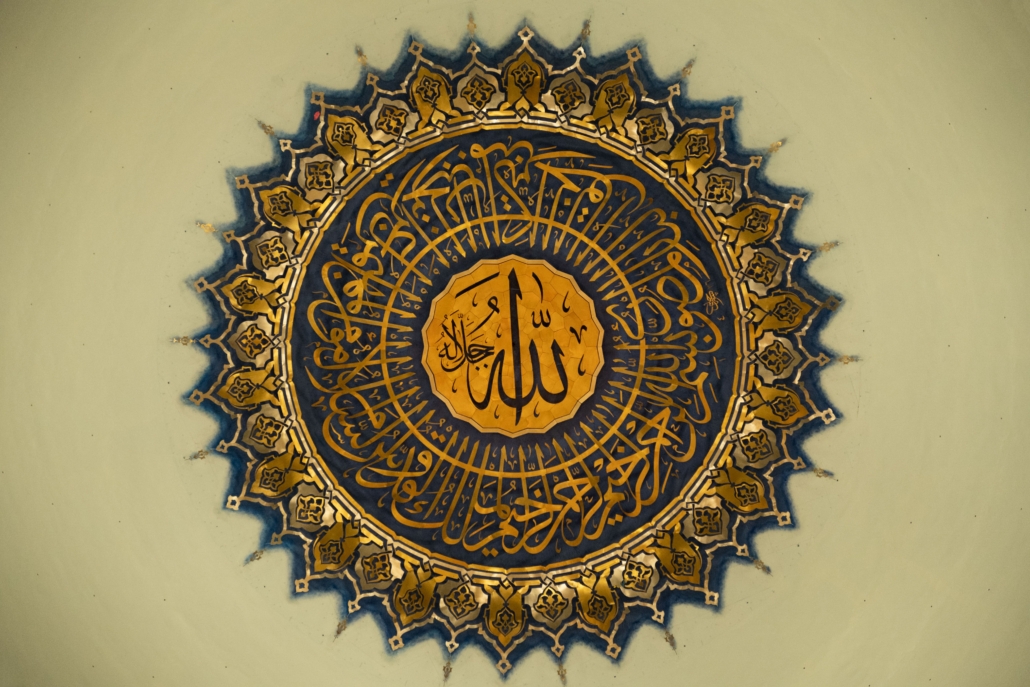
Is the Divine Name “Allah” Derived From the Arabic Word Al-Ilah?
Answered by Shaykh Faraz Rabbani
Question
I have heard that the root of the word “Allah” is “al-Ilah.” Is this correct?
Answer
In the Name of Allah, the Merciful and Compassionate.
Wa alaykum al-salam,
I hope you’re doing well, In sha’ Allah.
What you heard is one of two views held by the scholars, but it isn’t the stronger one. The stronger view, held by most scholars of the Arabic language, tafsir, and other central Islamic sciences, is that the Divine Name “Allah” is the proper name of the one true God, not derived from al-ilah or from any other root. Even so, meanings true of Him can be drawn from several Arabic roots.
Two Views on the Name
The scholars of language and creed (Allah have mercy on them) asked whether the Name of Divine Majesty (lafdh al-jalala), “Allah,” is derived (mushtaqq) or a proper name given without a root (murtajal).
Those who held it to be derived, a respected minority, mostly traced it to ilah, “deity,” with the hamza dropped and the definite article added.
In his deeply respected dictionary of Quranic terminology, Imam Raghib al-Isfahani (d. 502 AH) opens his entry with it: “It was said its origin is ilah.” [Raghib, al-Mufradat] This kind of expression implies a “distancing” from this position.
The late twentieth-century Tunisian master of tafsir, Imam Ibn Ashur, inclines to it, arguing from early poetry that the Arabs “regarded al-ilah as the origin of the word Allah.” [Ibn Ashur, al-Tahrir wa al-Tanwir]
Most scholars held the other view—that the Divine Name “Allah” is not derived.
Imam Ibn Abidin records that most hold it to be an Arabic proper name, underived, with no root considered for it, and counts Imam Abu Hanifa, Imam Muhammad ibn al-Hasan, Imam Shafiʿi, and the author of the first major dictionary of Arabic, al-Khalil ibn Ahmad, among them. [Ibn Abidin, Radd al-Muhtar]
In his encyclopedic tafsir Ruh al-Maʿani, Imam Shihab al-Din al-Alusi (d. 1270 AH) adds Imam Ashʿari and most of his school, Imam al-Haramayn al-Juwayni, Imam Ghazali, and Imam Fakhr al-Din al-Razi to those who held the Divine Name to be underived. [Alusi, Ruh al-Maʿani]
Imam Samin al-Halabi (d. 756 AH), the student of Abu Hayyan, in his brilliant grammatical tafsir of the Quran, affirms strongly that the correct view is the first, that the name is underived, and that it is the most definite of all definite nouns. [Samin al-Halabi, al-Durr al-Masun]
Why the Stronger View Is Stronger
The scholars mention many reasons why the Divine Name, Allah, being underived is the stronger position. Among these are:
One. This name is His alone. Allah Most High says, “Do you know any other who merits His name?” [Quran 19:65; Keller, The Quran Beheld]
In his brilliant commentary on the Alfiyya of Ibn Malik in Arabic grammar (which distills the great grammarians’ commentaries on the Alfiyya and other works), Imam Ushmuni explains that “Allah” is “a proper name for the Necessarily Existent Essence, deserving of all praise; none other has been named by it.” [Ushmuni, Sharh al-Alfiyya]
Imam Sabban adds in his Hashiya on Ushmuni’s Commentary that it is Allah’s proper name by its original coinage, not one that came to be reserved for Him through usage, “on the verified view.” [Sabban, Hashiyat al-Sabban]
Two. The testimony of faith requires it. Since all agree that “There is no god but Allah” affirms pure oneness, Imam Majd al-Din al-Fayruzabadi reasons, “we know it is a proper name for the Essence, not a derived word.” [Fayruzabadi, Basaʾir Dhawi al-Tamyiz]
Imam Ibrahim al-Bajuri, in his Hashiya on Taftazani’s Sharh al-Aqaʾid al-Nasafiyya, gives a reason: the name denotes one particular Being, not a general meaning, “otherwise ‘There is no god but Allah’ would not convey His oneness.” [Bajuri, Hashiyat al-Bajuri ala Sharh al-Aqaʾid]
Three. The two words differ in form and meaning. The great grammarian and author of the Alfiyya, Ibn Malik (d. 672 AH), argued that they come from two different roots, and that “Allah” was used for Him alone before Islam and after, while “ilah” (god) is a name for anything worshipped. [As quoted by Alusi, Ruh al-Maʿani]
Imam Ibn Abidin also reports from Imam Abu Hanifa, through Imam Muhammad, that it is the greatest name of Allah. [Ibn Abidin, Radd al-Muhtar] Imam Bajuri says this is the view of “the majority.” [Bajuri, Tuhfat al-Murid]
The Messenger of Allah (Allah bless him and give him peace) said, “Allah has ninety-nine names, one hundred less one; whoever retains them enters Paradise.” [Bukhari and Muslim] Those names describe Allah; the Divine Name “Allah” names the One they describe.
The Meanings the Roots Bring Out
Imam Samin al-Halabi reads the main root, a-l-h (from which we have the term “ilah”), as one word with several meanings, “so His creation worship Him, find repose in Him, are bewildered in Him, and flee to Him.” [Samin al-Halabi, al-Durr al-Masun]
If we look at the meanings the scholars mention, seven meanings for “ilah” (god) stand out.
One. Worship (alaha): He is “the One deserving of worship.” [Fayruzabadi, Basaʾir Dhawi al-Tamyiz]
Two. Bewilderment (aliha): minds are bewildered before the perfection of His greatness. [Ibid.]
Three. Repose (aliha ila): hearts find rest in Him, as the verse below says. [Alusi, Ruh al-Maʿani]
Four. Refuge (aliha ila, in hope and awe): He is “the One fled to in every grave matter.” [Fayruzabadi, Basaʾir Dhawi al-Tamyiz]
Five. Attachment (aliha al-fasil, said of a young camel clinging to its mother): His servants cling to Him in supplication in every state. [Ibid.]
Six. Being drawn (walaha): “every creature is drawn toward Him, by subjection alone, or by subjection and will together.” [Raghib, al-Mufradat]
Seven. Exaltation and veiling (laha): “He is exalted above all likeness,” and “veiled from minds and eyes.” [Fayruzabadi, Basaʾir Dhawi al-Tamyiz]
Some of these are “indicated meanings” understood from the root sense, and they give us beautiful insights into who the One True God, Allah, is and represents.
Let the Name Carry Its Meanings for You
Let these meanings come to mind whenever you say His name: the One you worship, turn to, and find joy, refuge, and rest in.
And He says, “Verily by the remembrance of Allah do hearts find peace.” [Quran 13:28; Keller, The Quran Beheld]
And Allah knows best.
Faraz Rabbani
Related Answers
One. Are the Names of Allah Most High Eternal? — Shaykh Faraz Rabbani: How the Names of Allah point to Allah Himself, with meanings He eternally possesses.
Two. What Is the Meaning of Ilah (Deity), and What Is the Explanation of the Negation and Affirmation Contained within the Kalima? — Mawlana Ilyas Patel: The meaning of ilah, the word in your question, within the testimony of faith.
Three. Is it Permissible to Use the Word God for Allah Most High? — Mawlana Ilyas Patel: When a word from another language may be used for Allah.
النصوص · Source-Texts
[الراغب، المفردات] «الله: قيل: أصله إله فحذفت همزته، وأدخل عليها الألف واللام، فخصّ بالباري تعالى»
[ابن عاشور، التحرير والتنوير] «عَلِمْنَا أَنَّهُمْ يَعْتَبِرُونَ الْإِلَهَ أَصْلًا لِلَفْظِ اللَّهِ»
[ابن عابدين، رد المحتار] «وَالْجُمْهُورُ عَلَى أَنَّهُ عَرَبِيٌّ عَلَمٌ مُرْتَجَلٌ مِنْ غَيْرِ اعْتِبَارِ أَصْلٍ مِنْهُ، وَمِنْهُمْ أَبُو حَنِيفَةَ وَمُحَمَّدُ بْنُ الْحَسَنِ وَالشَّافِعِيُّ وَالْخَلِيلُ»
[الألوسي، روح المعاني] «والذي عليه أكابر المعتبرين كالشافعي ومحمد بن الحسن والأشعري … وغالب أصحابه والخطابي وإمام الحرمين والغزالي والفخر الرازي وأكثر الأصوليين والفقهاء، ونقل عن اختيار الخليل وسيبويه والمازني وابن كيسان أنه عربي وعلم من أصله لذاته تعالى المخصوصة»
[السمين الحلبي، الدر المصون] «واختلف الناسُ هل هو مُرْتَجَلٌ أو مشتق؟، والصوابُ الأولُ، وهو أعرفُ المعارف»
[الأشموني، شرح الألفية] «علم على الذات الواجب الوجود -أي: لذاته- المستحق لجميع المحامد، ولم يسم به سواه … أي: هل تعلم أحدا تسمى الله غير الله»
[الصبان، حاشية على شرح الأشموني] «قوله: ”والله علم“ أي بالوضع لا بالغلبة التقديرية على التحقيق»
[الفيروزآبادي، بصائر ذوي التمييز] «وحيث أَجمع العقلاءُ على أَنَّ قولنا: لا إِله إِلاَّ الله يوجب التَّوحيد المحْض … علمنا أَنَّه عَلَم للذات، وأَنَّها ليست من المشتقَّات»
[الباجوري، حاشية على شرح العقائد] «ولفظ الجلالة: علم على الذات المعينة، فهو علم شخصي. مدلوله جزئي لا كلي. وإلا لم تفد (لا إله إلا الله) التوحيد»
[الألوسي، روح المعاني] «لأن الله والإله مختلفان لفظا ومعنى، أما لفظا فلأن أحدهما معتل العين، والثاني مهموز الفاء صحيح العين واللام فهما من مادتين … فلأن الله خاص به تعالى جاهلية وإسلاما والإله ليس كذلك لأنه اسم لكل معبود»
[ابن عابدين، رد المحتار] «وَرَوَى هِشَامٌ عَنْ مُحَمَّدٍ عَنْ أَبِي حَنِيفَةَ أَنَّهُ اسْمُ اللَّهِ الْأَعْظَمُ»
[الباجوري، تحفة المريد] «وهو اسم الله تعالى الأعظم عند الجمهور»
[البخاري] «إِنَّ لِلهِ تِسْعَةً وَتِسْعِينَ اسْمًا، مِائَةً إِلَّا وَاحِدًا، مَنْ أَحْصَاهَا دَخَلَ الْجَنَّةَ»
[مسلم] «إِنَّ لله تسعة وتسعين اسما. مائة إلا واحد. من أحصاها دخل الجنة»
[السمين الحلبي، الدر المصون] «ومنهم مَنْ جَعَلَه مشتقًا من أَلَه، وأَلَه لفظٌ مشترك بين معانٍ وهي: العبادةُ والسكون والتحيُّر والفزع، فمعنى «إله» أنَّ خَلْقَه يعبدونه ويسكنون إليه ويتحيَّرون فيه ويفزعون إليه»
[الفيروزآبادي، بصائر ذوي التمييز] «أَو من أَلَهَ يَأْلُهُ إِلهةً وتَأَلُّهًا كعَبد يعبُدُ عبادَةً وتَعَبُّدًا زنةً ومعنى، قاله النَّضر بن شُمَيْل. والمعنى: المستحِقّ للعبادة»
[المصدر نفسه] «ومعناه أَنَّه تَحَيّرُ العقول فى إِدارك كمال عظمته، وكُنْه جلال عزّته»
[الألوسي، روح المعاني] «أو من ألهت إلى فلان إذا سكنت إليه أَلا بِذِكْرِ اللَّهِ تَطْمَئِنُّ الْقُلُوبُ»
[الفيروزآبادي، بصائر ذوي التمييز] «من أَلِه إِليه يألَهَ كِسمع يسمع – إِذا فَزِعَ إِليه؛ لأَنَّه يُفزَع إِليه فى المهمّات»
[المصدر نفسه] «أَو من أَلِهَ الفَصِيلُ إِذا أُولع بأمّه. وذلك لأَنَّ العباد مولَعون بالتضرّع إِليه فى كلّ حال»
[الراغب، المفردات] «وقيل: أصله: ولاه، فأبدل من الواو همزة، وتسميته بذلك لكون كل مخلوق والها نحوه، إمّا بالتسخير فقط كالجمادات والحيوانات، وإمّا بالتسخير والإرادة معا كبعض الناس»
[الفيروزآبادي، بصائر ذوي التمييز] «من لاه يليه إِذا ارتفع؛ لارتفاعه – تعالى – عن مشابهة المِثليّات. وقيل: مادّته (ل وهـ) من لاه يلوه إِذا احتجب؛ لاحتجابه – تعالى – عن العقول والعيون»
Shaykh Faraz Rabbani is a recognized specialist scholar in the Islamic sciences, having studied under leading scholars from around the world. He is the Founder and Executive Director of SeekersGuidance. Shaykh Faraz stands as a distinguished figure in Islamic scholarship. His journey in seeking knowledge is marked by dedication and depth. He spent ten years studying under some of the most revered scholars of our times. His initial studies took place in Damascus. He then continued in Amman, Jordan. In Damascus, he was privileged to learn from the late Shaykh Adib al-Kallas. Shaykh Adib al-Kallas was renowned as the foremost theologian of his time. Shaykh Faraz also studied under Shaykh Hassan al-Hindi in Damascus. Shaykh Hassan is recognized as one of the leading Hanafi jurists of our era. Upon completing his studies, Shaykh Faraz returned to Canada in 2007. His return marked a new chapter in his service to the community. He founded SeekersGuidance. The organization reflects his commitment to spreading Islamic knowledge. It aims to be reliable, relevant, inspiring, and accessible. This mission addresses both online and on-the-ground needs. Shaykh Faraz is also an accomplished author. His notable work includes “Absolute Essentials of Islam: Faith, Prayer, and the Path of Salvation According to the Hanafi School.” This book, published by White Thread Press in 2004, is a significant contribution to Islamic literature. His influence extends beyond his immediate community. Since 2011, Shaykh Faraz has been recognized as one of the 500 most influential Muslims. This recognition comes from the Royal Islamic Strategic Studies Center. It underscores his impact on the global Islamic discourse. Shaykh Faraz Rabbani’s life and work embody a profound commitment to Islamic scholarship. His teachings continue to enlighten and guide seekers of knowledge worldwide.
