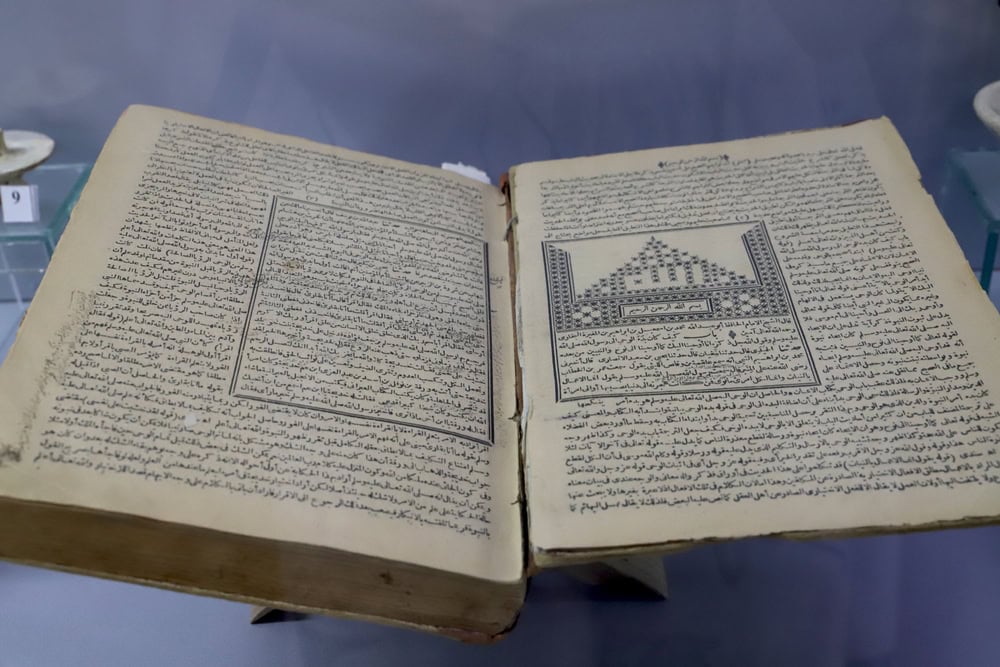
Mastering Hadith: From Categories to Method
This is the sixth in a series of articles on mastering the hadith sciences, drawn from Shaykh Issam Eido’s seminar. The full seminar can be found here: Mastering the Core Islamic Sciences: Hadith.
The science of hadith has shifted shape five times across the centuries: categories, terminology, theory, principles, method. What changed each time?
The First Book on Hadith
After Imam Shafiʿi, scholars began writing numerous treatises and manuals across the third, fourth, and fifth Islamic centuries, each addressing specific issues of verification and authentication.
It was in the fifth century that the first dedicated book on the science of hadith appeared: al-Hakim al-Naysaburi’s Maʿrifat ʿUlum al-Hadith. Al-Hakim introduced this science through categories (nawʿ) such as the elevated and the lowered chain (al-nawʿ al-ʿali wa l-nazil). Beneath each category sat a cluster of technical terms.
Five Shifts in the Science
The science of hadith has taken five different shapes across the centuries: categories, terminology, theory, principles, and method.
Hafiz Ibn al-Salah shifted the approach from categories to terminology (Mustala). Ibn Salah, for example, gave sahih its own dedicated discussion as a technical term.
Hafiz Ibn Hajar took this a step further still in his Nuzhat al-Nadhar. Rather than introducing hadith through terminology or categories alone, he introduced it through theory, showing how all of these individual technical terms connect to one another as a coherent whole.
Later still, but before the modern era, some scholars, such as Jamal al-Din al-Qasimi, began writing on the topic of verification (thubut) in terms of principles (qawaʿid al-tahdith). In our own century, a newer framing has emerged: method (manhaj). Examples include the method of hadith criticism (manhaj al-naqd) and the method of hadith acceptance (manhaj al-qabul).
Where These Principles Live
The books and principles above surface in two distinct places. The first is the dedicated manuals of hadith terminology themselves, Muqaddimat Ibn al-Salah and Nuzhat al-Nadhar among them. The second is within the legal theory manuals (usul al-fiqh) themselves, where every manual carries a chapter on the Sunna examining how jurists themselves came to understand it.
Hadith verification itself branches into impugning and accrediting narrators (al-jarh wa l-taʿdil), identifying the defects of a hadith (al-ʿilal), and sourcing hadith (takhrij).
This science carries several names across the tradition: the principles of hadith (usul al-hadith), hadith terminology (ilm al-mustalah), the science of hadith (ilm al-hadith), and the sciences of hadith (ulum al-hadith).
Principles and Early Methods
Hadith verification (thubut) requires knowing the principles by which a hadith and its narrators are judged trustworthy, along with the early methods of verification that shaped them.
Reading a brief manual such as Sharh al-Mandhuma al-Bayquniyya will allow the student to gain familiarity with some technical terms and basic principles. From this stage, a student can press further, moving from knowing the principles toward understanding the earlier methods of verification.
Understanding the early methods reveals real nuances, as well as how the science of verification actually began. This surfaces a genuine difficulty: the problem of terminology.
A term learned from a later manual or author, such as Sharh al-Mandhuma al-Bayquniyya or Ibn Hajar, may carry different meanings in the earlier sources. To reconcile this, one needs to work toward specialization (malaka), understanding the historical context of every technical term.
The lower level of verification entails understanding the terminology of the science of hadith. After reading Sharh al-Mandhuma al-Bayquniyya, which contains approximately thirty-six technical terms, a student can define these terms with ease.
Yet this fluency, valuable as it is, offers only the vocabulary of the field, not the specialization (malaka) within it. The next article will further elucidate how the path to mastery unfolds.
Related Articles
Mastering Hadith: The Science of Transmission – A look at how hadith formed through its early centuries, outlining its two branches and the early efforts of preservation. First in this series.
Mastering Hadith: The Science of Preservation – A look at how hadith scholarship narrowed its focus to the Prophet’s words alone (Allah bless him and give him peace). Second in this series.
Mastering Hadith: The Discipline of Understanding – Comprehension matters because understanding is a discipline, not an accident. Fifth in this series.
