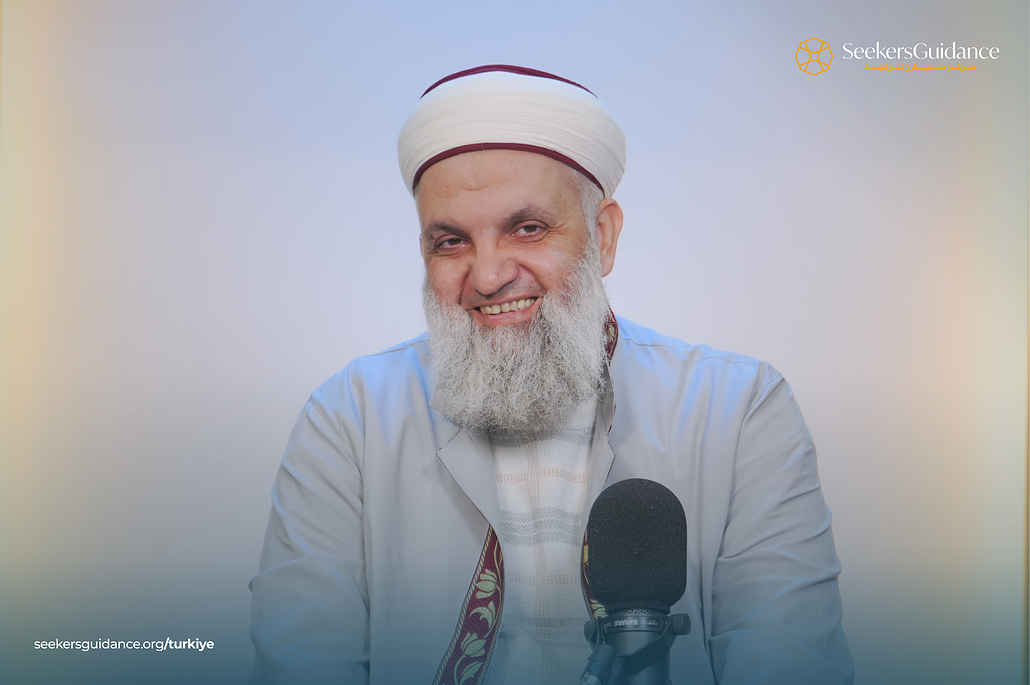
The Educational Counsel of Abu Hanifa by Shaykh Abd al-Rahman al-Kharsa
This article is based on the SeekersGuidance seminar, “How Do We Live Knowledge?”, which attempts to understand Abu Hanifa’s educational and pedagogical counsel and how it can be applied in our contemporary lives.
Knowledge, Manners, and the Educational Method of the Righteous
The stories of the righteous and their virtuous deeds hold a special place in Islamic scholarship, often valued even above extensive discussions of jurisprudence. This is because such stories embody the manners and character of the people of knowledge.
While jurisprudence is essential and widely taught, beginning with acts of worship and legal rulings, the focus on the lives, conduct, and counsels of the righteous remains a necessary foundation for any sincere seeker of knowledge. Knowledge alone is not sufficient; manners are equally required.
This emphasis on manners is not a matter resolved through a single lecture, sermon, or book. Rather, it represents a comprehensive and universal educational method. True guidance is not merely conveyed through words but through lived examples and established methodologies.
The people of knowledge have long recognized that effective education lies in this holistic approach, which encapsulates both instruction and character formation.
The Noble Quran itself provides multiple forms of instruction, commanding reflection, understanding, and God-consciousness. Divine commandments are not isolated rulings but foundational principles upon which many aspects of life are built.
Similarly, the Sunnah of the Prophet Muhammad (Allah bless him and give him peace) is replete with concise yet comprehensive counsels, such as the repeated advice to fear Allah and to listen and obey. These counsels were both general and specific, addressing individuals and communities alike.
The Counsel of Abu Hanifa
Among the most renowned examples of such guidance is the counsel of Imam Abu Hanifa. Though widely known as a great jurist, a mujtahid, and the founder of the largest juristic school in Islamic history, his distinction lay equally in his approach to education and moral upbringing.
His school, which originated in Kufa, continues to guide the worship of vast numbers of Muslims to this day.

Imam Abu Hanifa’s Dialogical Method of Teaching
Imam Abu Hanifa’s method of teaching was unique. He did not impose legal opinions upon his students; rather, he presented issues for discussion and invited scholarly debate. His circle of learning, established after the death of his teacher around 120 AH, functioned much like a research institution.
It was attended by towering figures such as Abdullah ibn al-Mubarak, Hafs ibn Ghiyath, Abu Yusuf, Muhammad ibn al-Hasan al-Shaybani, Zafar, al-Fudayl ibn ‘Iyad, and Dawud al-Ta’i, each of whom later became an authority in his own right.
When faced with difficulty in understanding a legal matter, Imam Abu Hanifa would attribute it to his own shortcomings, often saying that it was due to a sin he had committed. He would then rise to pray, seeking forgiveness, until clarity was granted. This humility and reliance upon Allah exemplified the integration of knowledge, worship, and character.
His devotion was so profound that he was known as “al-Watad” due to the length of his standing in prayer, during which he would sometimes complete the Quran in a single Witr prayer.
Beyond instruction, Imam Abu Hanifa was deeply invested in the personal welfare of his students. He ensured their financial stability, supported them materially from his earnings as a merchant, and inquired about their living conditions and marital status.
He treated them with paternal care, nurturing them not only as scholars but as complete individuals.
Through this method, he produced great leaders of knowledge, including Imam Abu Yusuf, Imam Muhammad ibn al-Hasan, and indirectly, Imam Shafi‘i.
Central to this educational philosophy was the concept of combining instruction with purification. True success in knowledge requires both learning and moral refinement.
The Quran emphasizes this balance, sometimes mentioning purification before teaching and at other times after it, indicating the continuous need for sincerity, both before acquiring knowledge and after attaining it, to guard against pride and self-admiration.
This tradition also underscores the importance of remaining connected to gatherings of scholars. Even scholars themselves were advised never to abandon such gatherings.
Despite the modern ease of accessing knowledge through technology, physical presence, humility, and respectful companionship remain irreplaceable elements of authentic learning.
The famous Hadith of Jibril illustrates this vividly, portraying an ideal learning environment grounded in respect, attentiveness, and proximity.
The counsel (wasiyyah) of Imam Abu Hanifa to his student Yusuf ibn Khalid al-Samti further reflects this holistic vision. After accompanying his teacher for many years, Yusuf sought permission to return to Basra.
Imam Abu Hanifa instructed him not to depart until he received counsel addressing social conduct, scholarly ranks, self-discipline, leadership, and public responsibility.
This counsel emphasized that harming people breeds enmity, while serving them earns enduring respect and affection.
Such guidance was meant to ensure that knowledge became a source of benefit rather than harm, adorning the scholar rather than disgracing him. Through adherence to this counsel, a scholar could become a true reference point for the community.
Living Knowledge Through Practice, Not Accumulation
Ultimately, living knowledge is not achieved through the accumulation of books or information alone. Rather, it is realized through reverence, discipline, and practice.
As Ibn Nujaym narrates from Shams al-A’immah al-Bukhari, true knowledge was attained through honoring it, never touching books except in a state of purity.
This reverence was exemplified by Imam Sarakhsi, who authored monumental works while imprisoned, dictating from memory and renewing his ablution repeatedly despite illness.
Such examples illustrate that knowledge is truly lived through behavior, devotion, and sacrifice. It is through this lived knowledge that scholars are able to lead, guide, and uplift their communities. May Allah grant understanding, sincerity, and the ability to follow in the footsteps of the righteous.
Shaykh Abd al-Rahman al-Kharsa is an Islamic scholar from Syria, born in Damascus in 1971. He earned a degree in Arabic Language from the University of Damascus and studied the Islamic sciences under the leading scholars and shaykhs of Greater Syria, including Shaykh ʿAbd al-Rahman al-Shaghouri, Shaykh Taj al-Din al-Kattani, Shaykh Muhammad Karim Rajih, Shaykh Bashir al-Bari, Shaykh Ibrahim al-Hindi, Shaykh Hisham al-Salahi, and others.
He memorized the Noble Quran and studied the ten canonical readings through the paths of al-Shatibiyyah and al-Durrah under Shaykh Muhammad Haytham Menini and Shaykh Abu al-Hasan al-Kurdi. He worked as a lecturer at al-Azhar University in the Lebanese Beqaa Valley, founded several Quran centers in different regions of Lebanon, and also managed Dar al-Quran al-Karim in Istanbul. There, he supervises Quran memorization, delivers public and private lessons, teaches through the ijazah system at Dar al-Fuqaha’ in Turkey, and works on the critical editing of books of the Hanafi school.
Among his scholarly works are critical editions of Tanwir al-Absar and Jamiʿ al-Bihar by Imam Tumurtashi.
