The Lessons of the Hijra and Muharram for an Allahcentric Life – Shaykh Faraz Rabbani
The Islamic month of Muharram, which includes the powerful Day of Ashura, holds deep spiritual weight for Muslims around the world. It is a month of reflection, remembrance, and renewal. As believers, we are encouraged to align our lives around our deen, and one powerful way to do that is by staying connected to the Islamic calendar, its months, and its sacred days.
Staying Connected to Sacred Time
In today’s world, it’s easier than ever to remain aware of the Islamic Hijri date. Many prayer apps now display the Hijri date alongside the Gregorian one. While calendars include national holidays like the 4th of July in the USA, for all their civic importance, they do not carry spiritual weight. In contrast, Islamic months carry timeless spiritual significance, reminding us of divine truths, our rich prophetic legacy, and the rhythm of sacred history.
Each Islamic month is more than a time marker, it is part of a framework that nurtures our religious identity and spiritual discipline. This is not a new idea. Allah (Most High) emphasizes this in the Quran in Sura Tawba [9:36], stating that He has ordained twelve months, four of which are sacred. Among these Ashhur al-Hurum (sacred months) is Muharram described as the Month of Allah by the Prophet (Allah bless him and give him peace).
Major obligations like Hajj are bound to specific times in the Islamic year. The scholars agree unanimously on the necessity of preserving this calendar and teaching its significance.
The Islamic calendar begins with Muharram. It connects us to profound moments in Islamic history, especially the Hijra of the Prophet Muhammad (Allah bless him and give him peace) from Makka to Madina, a turning point that transformed the course of the Umma forever.
The Day of Ashura
Among the most well-known features of Muharram is the Day of Ashura, which commemorates the miraculous victory granted to Prophet Musa (Peace be upon him) over Pharaoh. The Prophet (Allah bless him and give him peace) recognized this historical event and encouraged his followers to fast on Ashura, marking it as a day of gratitude and reflection.
Beyond Ashura, Muharram also resonates with other landmark moments such as the Treaty of Hudaybiyya, the battle of Uhud, and many demonstrations of sacrifice, patience, and perseverance by the early Muslim community. It is a month that teaches us the endurance of faith in the face of adversity.
The Prophet (Allah bless him and give him peace) said, as narrated in Sahih Muslim,
“The best fasting after Ramadan is the fasting of the month of Allah, Muharram.”
In another hadith, he said,
“The best prayer after the obligatory prayer is the night prayer.”
These are two distinct statements, yet together they highlight something profound: the importance of sacred times and the opportunity they offer for drawing near to Allah. Muharram stands out in this regard, especially the Day of Ashura, which the Prophet (Allah bless him and give him peace) emphasized with great care. Fasting on Ashura is an emphasized Sunnah, and fasting throughout this month is a highly meritorious act for those able to do so.
The Prophet (Allah bless him and give him peace) is also reported to have said that he had not seen a day more worthy of fasting than the Day of Arafah, and no month more worthy of fasting than Ramadan [Bukhari; Muslim]. These narrations show us the divine rhythm of the Islamic calendar: some moments carry greater spiritual weight than others, and we are invited to respond with devotion.
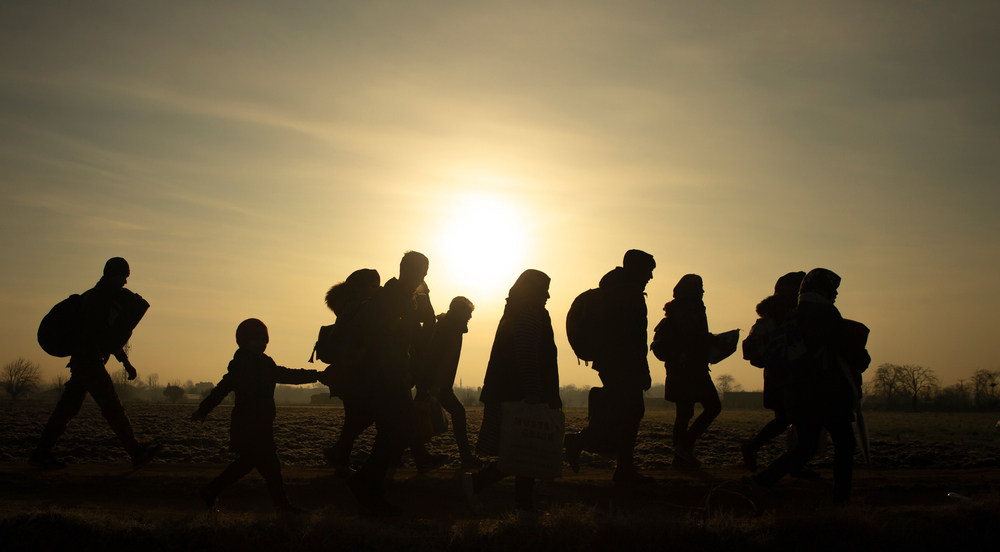
Yet Muharram is more than just a month of fasting, it is the month of the Hijra, the migration of the Prophet (Allah bless him and give him peace) from Makka to Madina. And this migration was not just a move from one city to another; it was a movement of the heart and soul, a journey to Allah, with Allah.
Watch the Lessons of the Hijra & Muharram for an Allah-Centric Life by Shaykh Faraz Rabbani
The Hijra
The Hijri calendar begins with the Hijra not just as a historical event, but as a spiritual blueprint. In a famous hadith, the Prophet (Allah bless him and give him peace) said:
“Actions are judged by intentions, and everyone will be rewarded according to what they intended. Whoever migrates for Allah and His Messenger, then their migration is for Allah and His Messenger.” [Bukhari; Muslim]
This hadith reveals the deeper essence of the Hijra, it was not merely a geographical movement from one city to another. It was a migration of purpose, of heart, of devotion. Beginning the Islamic calendar with this event serves as a constant reminder that our lives are meant to be oriented toward
Allah and His Messenger (Allah bless him and give him peace), not just measured in days and months devoid of meaning.
While we may use the Gregorian calendar in our practical, daily affairs, the Hijri calendar is sacred. It defines our seasons of worship, connects us to prophetic traditions, and keeps our spiritual compass pointed in the right direction.
By reclaiming the Hijri calendar as a living part of our lives, not just something we see during Ramadan or Hajj, we realign ourselves with a prophetic rhythm of time. Muharram is a beautiful starting point for this return, a gateway to spiritual renewal, grounded in history, and bursting with meaning.
In reflecting on this sacred beginning, we’re reminded of the words of Sayyidi Ibn Mashish, a great spiritual guide in our tradition. When someone approached him asking for advice on various devotions, he paused and said:
“Am I a messenger? The guidance of the religion is clear, and its limits are well known, so follow them. But if I were to give you one piece of advice, it would be this: fall in love with Allah. For the love of Allah is the axis around which all good revolves.”
This powerful counsel captures the very essence of Hijra. It wasn’t a flight from difficulty, but a movement toward Divine Love. It teaches us that the goal of every step we take should be Allah.
When the Prophet (Allah bless him and give him peace) sought refuge in the cave with Sayyiduna Abu Bakr as-Siddiq (Allah be pleased with him), the atmosphere was tense. Abu Bakr was deeply concerned: not for himself, but for the safety of the Prophet (Allah bless him and give him peace). He plugged the holes in the cave with his own garments, protecting his beloved companion. Seeing his worry, the Prophet (Allah bless him and give him peace) consoled him with those immortal words:
“Do not grieve; indeed, Allah is with us.” [Quran, 9:40]
This statement is not just a moment of historical comfort, it is a timeless truth. It is the foundation of faith. Allah is with us. This is the message of Hijra. This is the path of every believer: to seek Allah, knowing He is near.
The great sage Shaykh Abdul Rahman al-Shaghuri once traveled to Jordan after recovering from a severe stroke. A friend asked him, “After all these years on the path to Allah, what have you discovered?” The Shaykh answered simply:
“That Allah is with you, wherever you are.”
This echoes the Quranic truth:
“And He is with you wherever you may be.” [Quran, 57:4]
Imam Al-Ghazali described Sura Yasin as the heart of the Quran for this very reason: it reflects the deep reality of Allah’s nearness. Similarly, Ibn Ajiba, in his tafsir Al-Bahr Al-Madid, explains that the core of the Quranic message is the constant awareness of Allah’s presence.
That is why grounding ourselves in the Islamic calendar, with all its sacred moments, is not a formality. It’s a way to realign our lives with divine time. The Islamic year does not begin with ease or celebration; it begins with Hijra, a difficult journey, but one that was entirely for Allah, by Allah, and with Allah.
The Meaning of Bismillah
This spirit is beautifully contained in the phrase that begins nearly every chapter of the Quran:
“Bismillahir Rahmanir Raheem”
In the name of Allah, the Most Merciful, the Most Compassionate.
What does it mean to begin in the name of Allah? Scholars have written volumes exploring its depth. But at its heart, three meanings emerge:
Firstly: By Allah – relying entirely upon Him. Secondly: For Allah – seeking only His pleasure. Thirdly: With Allah – striving to walk in His presence.
This is the very essence of Hijra. And this is how we begin the year: not with resolutions, but with intention. Not with personal ambition, but with surrender and love for the One who never leaves our side.
Muharram is a month full of potential—for fasting, for prayer, for reorientation. It is a time to ask ourselves: Am I walking toward Allah? Am I walking with Him?
A poet from the Rifa’i tradition once wrote:
“Our path is for Allah. In it, there is nothing but Allah.”
This was the reality of the Prophet (Allah bless him and give him peace), who walked the earth as a luminous guide, every moment of his life full of divine purpose and mercy.
These days are not merely historical anniversaries, they are living opportunities. A time to rejoice in Allah’s mercy, as the Qu
ran commands:
“Say: In the bounty of Allah and in His mercy, in that let them rejoice.” [Quran, 10:58]
The Prophet (Allah bless him and give him peace) smiled more than anyone—not just to put others at ease, but as an expression of his joy in his Lord.
Let us take this opportunity, as Muharram dawns and Ashura approaches, to remember: every fast, every prayer, every act of sincerity, it is all for Allah. Let this sacred month realign our hearts and center our lives around Him.
“Truly, Allah is with us.”
May we live by these meanings, seek them with sincerity, and rejoice in them deeply. That is the path.
