Is It Permissible For Elders To Place Hands On The Head?
Answered by Shaykh Irshaad Sedick
Question
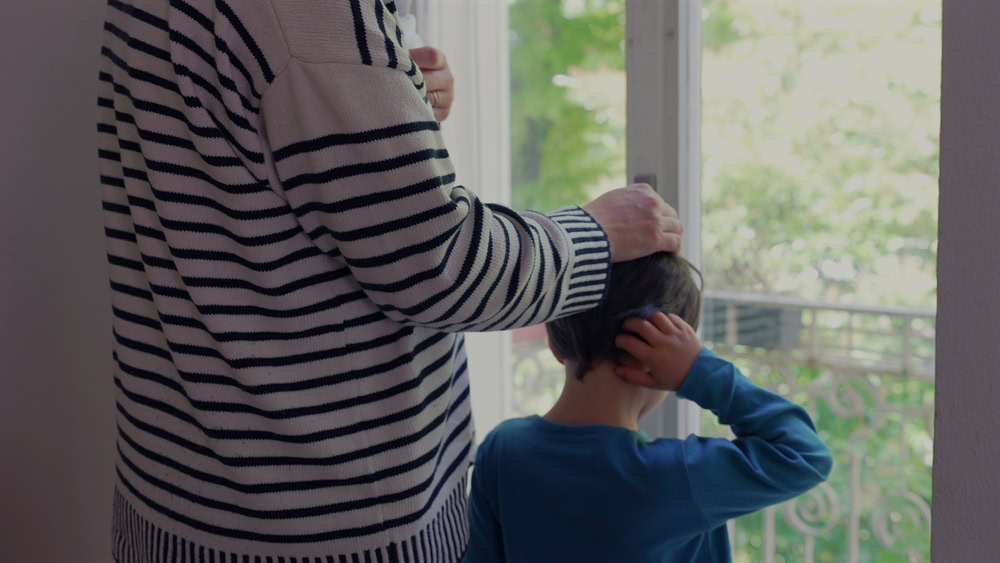
Is it permissible to allow elders to place their hand on my head as a sign of love, without bowing, as part of cultural respect?
Answer
In the Name of Allah, the Most Merciful and Compassionate.
May Allah reward you for your thoughtful question and your concern about preserving both adab (etiquette) and Sacred Law. We ask Allah to grant you clarity and steadfastness.
Honoring and respecting elders is a virtuous act. The act in question is permissible, and Allah knows best.
The Prophet (Allah bless him and give him peace) said:
“He is not of us who does not show mercy to our young ones and respect to our elders.” [Tirmidhi]
This hadith encourages a culture of mutual care and reverence in the community.
In many cultures, including those in South Asia, there are similar customs, such as elders or scholars placing their hands on the head of a younger person as a gesture of affection or blessing. This gesture is not inherently religious nor implies any form of worship or divine veneration.
Ruling
Yes, it is permissible to allow elders to place their hand on your head as a sign of love and cultural respect, provided that:
- There is no bowing or ruku‘ involved, as acts of submission such as bowing are reserved solely for Allah.
- The intention is purely affectionate or respectful, not devotional.
- It does not lead to any incorrect belief or action, such as attributing divine power or crossing the lines of non-mahram interaction.
Relevant Hadith Evidence
A companion named ‘Umayra, the daughter of Sahl and a child at the time, shared how her father once brought her to the Prophet (Allah bless him and give him peace). He asked the Prophet to place his hands on her head and pray for both of them to receive baraka, as she was his only child.
“The Messenger of Allah (Allah bless him and give him peace) laid his hands on my head. I swear by Allah that I felt the coolness of the hand of the Messenger of Allah (Allah bless him and give him peace) in my liver!” [Bayhaqi and Ibn ‘Asakir, Majma‘al-Zawa’id]
Jabir ibn Samura narrated,
“I prayed the first prayer with the Messenger of Allah (Allah bless him and give him peace). Afterward, he went outside, and I followed him. He encountered some children and gently rubbed their cheeks one by one. When it was my turn, he rubbed my cheek, and I noted that his hand felt cool and had a pleasant fragrance, as if he had just come from a perfume vendor’s bag.” [ Muslim]
The above narrations convey the Prophet’s (Allah bless him and give him peace) loving and dignified conduct with children. He used physical gestures such as placing his hand on the head and chest to share blessings, express welcome, warmth, and a personal connection.
Traditional scholars often comment on the tremendous blessings from the hands of the best of Allah’s creation and the effect it must have had on the person he touched in this prophetic way.
A Balanced Cultural Approach
As long as you respect the limits set by Sacred Law and refrain from any ritualistic or submissive gestures, such expressions are allowed. Islam acknowledges cultural displays of affection and respect as long as they align with Sacred Law.
Conclusion
You may accept this gesture from elders as a sign of love and affection, without hesitation, as long as it remains free from prohibited elements such as bowing or believing that any benefit or blessing occurs independent of Allah. Maintain your intention, uphold Islamic etiquette, and continue showing respect to your elders in a way that draws you nearer to Allah.
And Allah knows best.
[Shaykh] Irshaad Sedick
Checked and Approved by Shaykh Faraz Rabbani
Shaykh Irshaad Sedick was raised in South Africa in a traditional Muslim family. He graduated from Dar al-Ulum al-Arabiyyah al-Islamiyyah in Strand, Western Cape, under the guidance of the late world-renowned scholar Shaykh Taha Karaan (Allah have mercy on him), where he taught.
Shaykh Irshaad received Ijaza from many luminaries of the Islamic world, including Shaykh Taha Karaan, Shaykh Muhammad Awama, Shaykh Muhammad Hasan Hitu, and Mawlana Abdul Hafeez Makki, among others.
He is the author of the text “The Musnad of Ahmad ibn Hanbal: A Hujjah or not?” He has been the Director of the Discover Islam Centre, and for six years, he has been the Khatib of Masjid Ar-Rashideen, Mowbray, Cape Town.
Shaykh Irshaad has fifteen years of teaching experience at some of the leading Islamic institutes in Cape Town. He is currently building an Islamic podcast, education, and media platform called ‘Isnad Academy’ and has completed his Master’s degree in the study of Islam at the University of Johannesburg. He has a keen interest in healthy Prophetic living and fitness.
