Did Imam Abu Hanifa Err on Zakat al-Fitr’s Monetary Form?
Hanafi Fiqh
Answered by Mawlana Ilyas Patel
Question
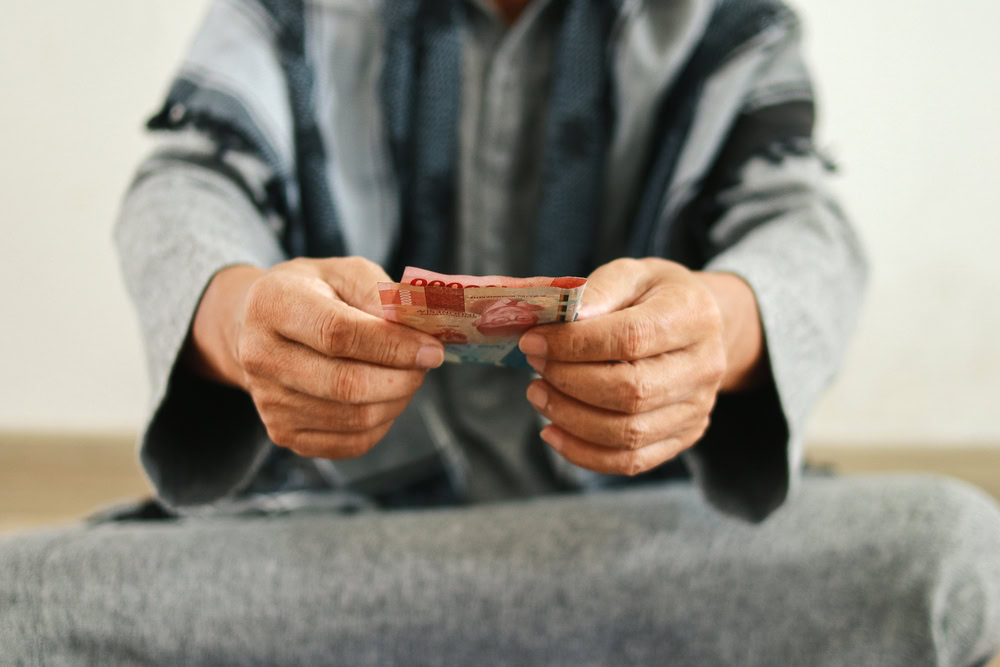
How should we respond to claims that Imam Abu Hanifa erred by allowing zakat al-fitr to be given in money, and that this contradicts the Sunna of giving it in food?
Answer
In the Name of Allah, the Most Merciful and Compassionate.
I pray you are in good faith and health. Thank you for your question.
The Hanafi school clearly states that when goods are readily available in the market, it is preferable to give cash instead of items for Zakat al-Fitr. It is only acceptable to give items when they are hard to find. The school acknowledges both methods: giving cash is recommended, but giving in kind is also allowed as a sunna. [Ibn ‘Abidin, Radd al-Muhtar; Shurunbulali, Maraqi al-Falah]
Hadith and Report Evidences
Chapter: Zakat May be Paid in Kind
Tawus said, Mu‘adh (Allah be pleased with him) said to the people of Yemen, “Bring me small, or used garments in charity in place of barley and millet, as it will be easy for you and useful for the Companions of the Prophet (Allah bless him and give him peace) in Madina.”
The Prophet (Allah bless him and give him peace) said,
“Khalid has kept his shield and arms for Allah’s cause.” And the Prophet (Allah bless him and give him peace) said to the ladies, “Give in charity, even from your ornaments.”
The Prophet (Allah bless him and give him peace) did not differentiate between the Zakat and other kinds of Sadaqa in this respect. So the women donated their earrings and necklaces. The Prophet (Allah bless him and give him peace) did not specify that what might be paid in kind should be silver or gold. [Bukhari]
Our Hanafi scholars used this as evidence for the permissibility of giving monetary value in zakat. That is why Ibn Rushayd said: Imam Bukhari agreed with the Hanafis on this issue, despite often differing with them. [‘Ayni, Umdat al-Qari li Sharh Sahih al-Bukhari]
Reports from Musannaf Ibn Abi Shayba
Below are some reports from Musannaf Ibn Abi Shayba:
On Giving Dirhams (Money) in Zakat al-Fitr
10368—Abu Usama narrated from Ibn ‘Awn, who said:
“I heard the letter of ‘Umar ibn ‘Abd al-‘Aziz being read to ‘Adi in Basra: ‘Half a dirham should be taken from the people of the register (diwan) from their stipends for each person.’”
10369—Waki‘ narrated from Qurrah who said:
“A letter came to us from ‘Umar ibn ‘Abd al-‘Aziz regarding Zakat al-Fitr:‘Half a sā‘ (of food) from each person, or its value: half a dirham.’”
10370—Waki‘ narrated from Sufyan, from Hisham, from al-Hasan, who said: “There is no harm in giving dirhams (money) in Zakat al-Fitr.”
10371—Abu Usama narrated from Zuhayr, who said: “I heard Abu Ishaq say: ‘I found them giving dirhams in Zakat al-Fitr according to the value of the food.’”
These reports show that some of the early scholars and righteous predecessors, such as ‘Umar ibn ‘Abd al-‘Aziz, Hasan al-Basri, and Abu Ishaq, approved of giving money instead of food in Zakat al-Fitr, based on the value of the prescribed food amount.
Please go through the valuable answers and links below. Insha’Allah, they will provide you with guidance and direction.
Related: Zakat al-fitr Archives
Why not begin your search for knowledge by signing up for a course on SeekersGuidance? You can choose from the Islamic Studies Curriculum and progress through each course step by step.
I pray this helps with your question.
Wassalam,
[Mawlana] Ilyas Patel
Checked and Approved by Shaykh Faraz Rabbani
Mawlana Ilyas Patel has received traditional education in various countries. He started his schooling in the UK and completed his hifz of the Quran in India. After that, he joined an Islamic seminary in the UK, where he studied secular and Aalimiyya sciences. Later, he traveled to Karachi, Pakistan, and other Middle Eastern countries to further his education. Mawlana has served as an Imam in the Republic of Ireland for several years and taught the Quran and other Islamic sciences to both children and adults. He also worked as a teacher and librarian at a local Islamic seminary in the UK for 12 years. Presently, he lives in the UK with his wife and is interested in books and gardening.
