What Explains Missing Case Endings in Early Quranic Manuscripts?
Answered by Mawlana Ilyas Patel
Question
How can we reconcile scholarly claims about early Quranic manuscripts lacking full case endings and the diversity of pre-Islamic Arabic with the belief that the Quran’s language has been perfectly preserved?
Answer
In the Name of Allah, the Most Merciful and Compassionate.
I pray you are in good faith and health. Thank you for your question.
Allah Most High has promised to preserve the Quran fully. The Quran has been preserved through mass transmission across the Muslim lands. Muslims reached China in the East and Spain in the West within the first three generations, both orally and in writing.
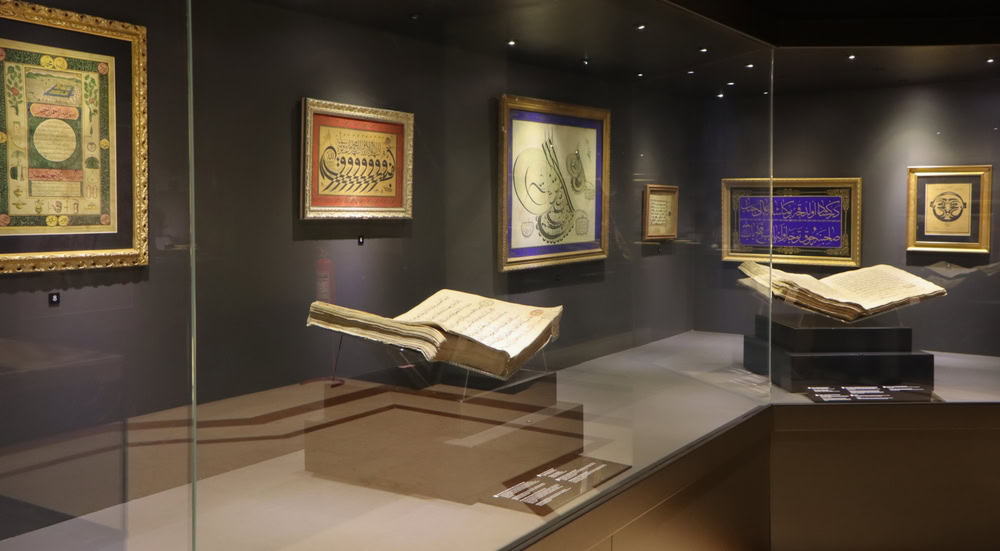
Early Quranic manuscripts lacked case endings and vowel marks due to limitations in writing, not corruption. The oral recitation preserved pronunciation, grammar, and meaning, ensuring precise pronunciation and understanding from the Prophet (Allah bless him and give him peace) onward.
Both traditional Muslim scholarship and modern research agree that the core consonantal text has remained stable since the 7th century, with later vowel marks reflecting, rather than changing, the recited form. [Muhammad Mustafa al-A‘zami, The History of the Quranic Text; Usmani, Approaching the Quranic Sciences]
I encourage you to read through the valuable answers and links to detailed books below. Insha’Allah, you will gain a deeper understanding of your question.
Related
- Connecting the Dots: Diacritics, Scribal Culture, and the Qurʾān in the First/Seventh Century (PDF)
- The History of the Quranic Text (Muhammad Mustafa al-A‘zami) (PDF)
- Reading List for Advanced Students of Tajwid, Qira’a
- Variant Readings of the Quran(PDF)
- The History of Qur’anic Text (PDF)
- Approaching the Quranic Sciences (Book)
Why not begin your search for knowledge by signing up for a course on SeekersGuidance? You can choose from the Islamic Studies Curriculum and progress through each course step by step.
I pray this helps with your question.
Wassalam,
[Mawlana] Ilyas Patel
Checked and Approved by Shaykh Faraz Rabbani
Mawlana Ilyas Patel has received a traditional education in various countries. He started his schooling in the UK and completed his hifz of the Quran in India. After that, he joined an Islamic seminary in the UK, where he studied secular and Aalimiyya sciences. Later, he traveled to Karachi, Pakistan, and other Middle Eastern countries to further his education. Mawlana has served as an Imam in the Republic of Ireland for several years and taught the Quran and other Islamic sciences to both children and adults. He also worked as a teacher and librarian at a local Islamic seminary in the UK for 12 years. Presently, he lives in the UK with his wife and is interested in books and gardening.
