If Devils Are Chained in Ramadan, How Could Shaytan Be at Badr?
Answered by Shaykh Faraz Rabbani
Question
If the devils are chained in Ramadan, how could Shaytan be present at the Battle of Badr, which was fought in Ramadan?
Answer
Thank you for a careful question. Wanting to understand, not just explain away, is a sign of faith. There is no contradiction here.
Scholars never understood the chaining of the devils in Ramadan as a total lockdown. The Quran itself shows Shaytan at Badr, but only to show his defeat when Allah’s help arrives. Let us look at what the hadith means and what happened at Badr.
The Chaining Is a General Grace, Not an Absolute Lockdown
The hadith reads: “When Ramadan comes, the gates of Paradise are opened, the gates of Hell are closed, and the devils are chained.” [Bukhari; Muslim]
Read alongside its sister narrations, the meaning becomes clearer. Several wordings restrict the chaining to the worst devils: “the devils and the rebellious jinn (marada al-jinn) are chained.” [Tirmidhi; Ibn Maja; Ibn Khuzayma] Imam al-Nasai has said: “The rebellious devils are shackled.” The reports never claimed that every devil, without exception, is bound.
The commentators drew the distinction you are reaching for—between “generally” and “absolutely.” Qadi Iyad writes that the chaining may be “from some things and not others, from some devils and not others, or in the dominant case.” [Qadi Iyad, Ikmal al-Mu’lim, 4:4–5] Imam Nawawi says the same: they are chained “from some things and not others, for some people and not others.” [Nawawi, Sharh Sahih Muslim, 7:187] A general statement in Islamic law can hold true while admitting particulars and exceptions. This is how scholars constantly read Revelation.
This is also why sin does not disappear in Ramadan. Imam al-Qurtubi explains that even if all the devils were chained, evil would still happen. There are other causes: the self (nafs), bad habits, and even other people. [Ibn Hajar, Fath al-Bari, 4:114; Ayni, Umdat al-Qari, 10:268] Ramadan gives the believer an advantage, but the struggle remains. Imam Ayni points out that what we see is a clear drop in evil during the month. [Ayni, Umdat al-Qari, 10:268]
Iblis Himself May Stand Apart, Reprieved Until the Last Day
There is a further key bearing directly on Badr. Some scholars hold that Iblis—the chief of the devils—is not included in the chaining at all.
Mulla Ali al-Qari writes: “It is said that the leader of their host is excepted from the general ‘the devils are chained,’ because of the reprieve he sought from Allah and was granted—so what occurs of disobedience occurs through his tempting.” [Mulla Ali al-Qari, Mirqat al-Mafatih, 4:391] Iblis alone was granted respite “until the Day of the appointed time.” [Quran 15:36–38] The one reprieved until the Last Day is not obviously among the bound.
Scholars differed on this point. Imam Ayni held that since the rebellious devils are chained, Iblis, as their leader, is also restrained. [Ayni, Umdat al-Qari, 7:191] Either view removes the problem. If Iblis is not chained, his presence at Badr is not an exception. If he is chained, his actions at Badr only show his weakness, just as the hadith describes.
Badr Displays the Devil’s Defeat, Not His Strength
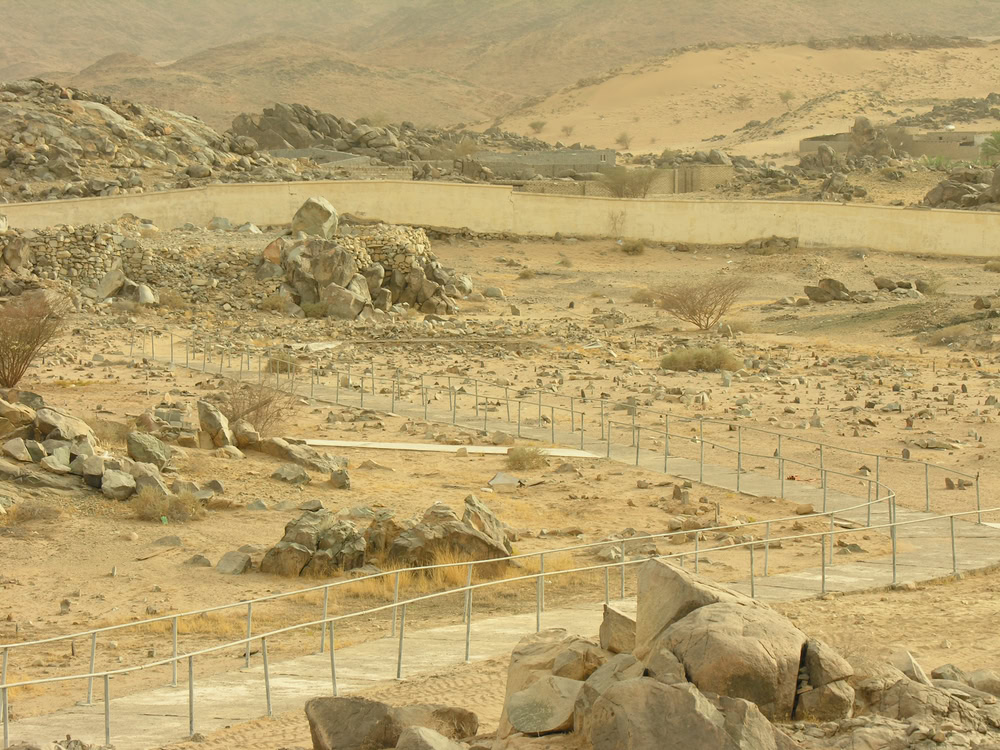
Badr was fought on the seventeenth of Ramadan in the second year of the Hijra—the first Ramadan in which the believers fasted. Allah named that day the Day of Distinction (Yawm al-Furqan), the day He parted truth from falsehood. [Quran 8:41] Imam Ibn Ashur explains that Badr earned this name because it was the first day weak believers overcame mighty idolaters—proof of who stood with truth. [Ibn Ashur, al-Tahrir wa al-Tanwir]
Into this came the Devil. Quranic commentators relate that Iblis appeared to the Quraysh in the form of Suraqa ibn Malik, with a banner and a host of devils, whispering: “No one can overcome you today. I am surely by your side.” [Quran 8:48; Ibn Kathir, Tafsir al-Quran al-‘Azim, :; Qurtubi, al-Jami’ li-Ahkam al-Quran]
Then the angels descended. Allah had promised to reinforce the believers with a thousand angels. [Quran 8:9] The same verse tells what became of the Devil: “But when the two forces faced off, he cowered and said, ‘I have absolutely nothing to do with you. I certainly see what you do not see. I truly fear Allah.'” [Quran 8:48]
That is the whole point. The Devil’s role at Badr was to promise and then to flee. Imam Qatada put it forcefully: “That is the enemy of Allah’s habit with everyone who obeys him—until, when truth and falsehood meet, he abandons them in the worst way and disowns them.” [Ibn Kathir, Tafsir al-Quran al-‘Azim]
Badr does not go against the mercy of Ramadan. It shows it in action. The Messenger of Allah (Allah bless him and give him peace) said that Shaytan was never seen more humiliated or angrier than on the Day of Arafa, except for what he saw on the Day of Badr, when he saw the angels come down. [Malik, al-Muwatta] Both the month of mercy and the day of victory bring him low.
What the Devil Can Do, and What He Cannot
Beneath your question sits the deepest point, a matter of creed. The Devil’s entire power is invitation; he holds no power of compulsion. On the Day of Judgment, he will tell his followers, “I did not have any authority over you. I only called you, and you answered. So do not blame me; blame yourselves.” [Quran 14:22]
Imam al-Razi states plainly that the Devil cannot compel a person or strip him of his choice, with this very verse as his proof. [Razi, Mafatih al-Ghayb] “The schemes of Shaytan are ever weak.” [Quran 4:76]
This matches the creed of the Ash’aris and Maturidis. Everything happens by Allah’s will and wisdom: the chaining, the whispering, the angels coming down, and Iblis running away. Allah binds whom He wills and gives respite to whom He wills. He lets truth and falsehood meet so truth stands clear. The enemy is real, but he only begs at the door of the heart. He does not rule it. Whoever turns to Allah by fasting, reading the Quran, or seeking His protection finds that the door stays shut.
Turning a Hard Question Into Firmer Certainty
The main point is this: the hadith about chaining the devils describes a mercy that weakens them and helps the believer. Iblis at Badr shows that even his strongest effort fails as soon as Allah’s help comes. These two texts do not clash. They teach the same lesson from different sides.
If you face a question like this again, treat it as you did here. Look closer. You will often find not a problem, but a deeper harmony. May Allah, who defeated falsehood at Badr and chains the devils each Ramadan, keep your heart firm and reward you for asking so well.
And Allah knows best.
Shaykh Faraz Rabbani
Related Answers
- Understanding the Hadith of Chained Devils on Fasting and Thoughts — Clear explanation of what scholars mean by the chaining of devils and how it applies across different types of people and circumstances.
- Does the Concept of Devil Tying Knots While a Person Sleeps Still Apply During Ramadan When Devils Are Locked Up?— Direct address of another apparent contradiction about devil activity in Ramadan and the nature of the chaining.
- How Can Bad Dreams Occur during Ramadan When the Shayateen Are Locked Away? — Practical guidance on understanding spiritual protection in Ramadan and sources of difficulty beyond satanic influence.
- Satanic Whisperings (Waswasa) as a Trial from Allah: Punishment or Blessing? — Framework for understanding how temptation functions as a test and opportunity for spiritual growth.
- Is the Shaytan Who Whispered You to Sin the Same One Who Comes to Make You Despair? — Clarity on the nature and tactics of satanic whispering and how to distinguish between different types of temptation.
Shaykh Faraz Rabbani is a recognized specialist scholar in the Islamic sciences, having studied under leading scholars from around the world. He is the Founder and Executive Director of SeekersGuidance.
Shaykh Faraz stands as a distinguished figure in Islamic scholarship. His journey in seeking knowledge is marked by dedication and depth. He spent ten years studying under some of the most revered scholars of our times. His initial studies took place in Damascus. He then continued in Amman, Jordan.
In Damascus, he was privileged to learn from the late Shaykh Adib al-Kallas. Shaykh Adib al-Kallas was renowned as the foremost theologian of his time. Shaykh Faraz also studied under Shaykh Hassan al-Hindi in Damascus. Shaykh Hassan is recognized as one of the leading Hanafi jurists of our era.
Upon completing his studies, Shaykh Faraz returned to Canada in 2007. His return marked a new chapter in his service to the community. He founded SeekersGuidance. The organization reflects his commitment to spreading Islamic knowledge. It aims to be reliable, relevant, inspiring, and accessible. This mission addresses both online and on-the-ground needs.
Shaykh Faraz is also an accomplished author. His notable work includes “Absolute Essentials of Islam: Faith, Prayer, and the Path of Salvation According to the Hanafi School.” This book, published by White Thread Press in 2004, is a significant contribution to Islamic literature.
His influence extends beyond his immediate community. Since 2011, Shaykh Faraz has been recognized as one of the 500 most influential Muslims. This recognition comes from the Royal Islamic Strategic Studies Center. It underscores his impact on the global Islamic discourse.
Shaykh Faraz Rabbani’s life and work embody a profound commitment to Islamic scholarship. His teachings continue to enlighten and guide seekers of knowledge worldwide.
