Is It Hypocritical for Muslims to Criticize Non-Muslim Occupation If Classical Islamic Law Permits Muslims to Rule over Non-Muslims?
Answered by Shaykh Irshaad Sedick
Question
Is it hypocritical for Muslims to criticize non-Muslim occupation if classical Islamic law permits Muslims to rule over non-Muslims?
Answer
In the Name of Allah, the All-Merciful, the Especially Merciful. May Allah alleviate our difficulties and guide us to what pleases Him. Amin.
Is it Hypocrisy?
It is not hypocritical for Muslims to condemn modern occupations while simultaneously acknowledging that Sacred Law permits Muslim governance over non-Muslims. The difference lies in the principles and practice of governance.
Governance, according to Sacred Law, is based on divine justice. Allah (Most High) says: “Indeed, Allah commands you to render trusts to whom they are due and when you judge between people to judge with justice.” [Quran, 4:58]
Occupation Versus Rule
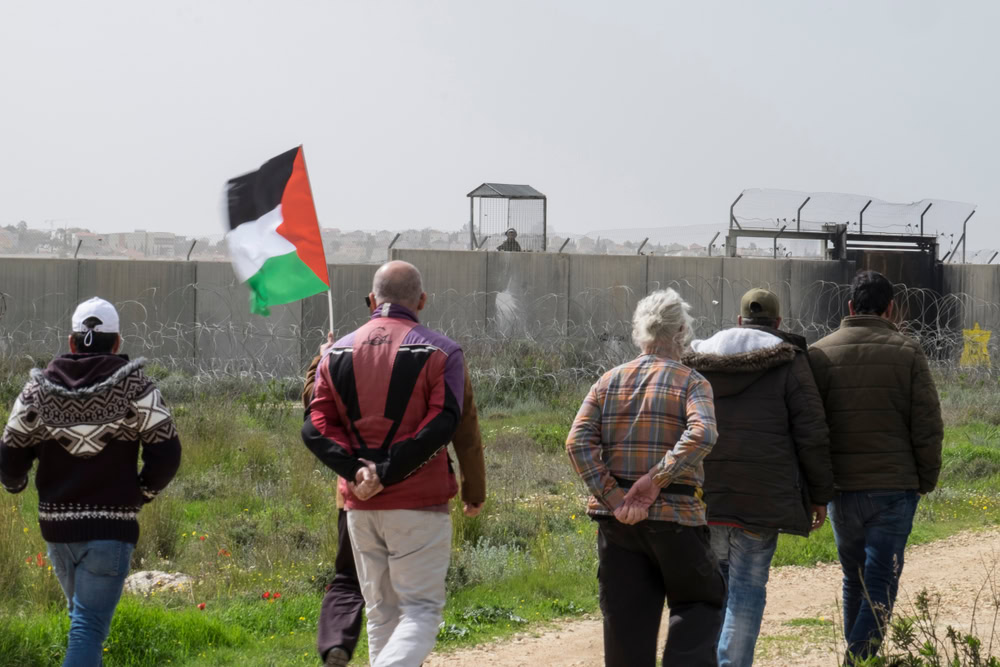
- Modern Occupation usually involves military domination, dispossession of land, exploitation of resources, and the systematic oppression of the native people.
- Sacred Law Rule, as seen in the very existence of the concept of ‘dhimmi’ (non-muslim under Muslim rule), the prohibition of forced conversion, and the preservation of the rights of non-Muslims to worship and administer their own communal affairs. Non-Muslims under Muslim rule were promised safety, justice, and dignity comparable to that of Muslims.
History bears witness: Jewish communities often flourished under Muslim rule in Spain and the Ottoman Empire after suffering persecution elsewhere, especially in Europe. Muslim governance was not free from failure, but its principles of divine justice opposed tyranny.
Practical Guidance
- Differentiate principles from abuse: Muslims object to oppression, whether by Muslims or non-Muslims. If a Muslim ruler oppresses, he violates Islam itself.
- Acknowledge history honestly: While Muslim rule expanded through conquest, it was largely bound by Sacred Law, which explicitly prohibits oppression. This contrasts starkly with occupations that dispossess, humiliate, and often, massacre.
- Uphold justice universally: Muslims must be consistent, defending the oppressed regardless of race or religion.
- Emphasize Islam’s ethos: Our tradition does not sanctify oppression; it sanctifies justice, mercy, and dignity for all.
I pray Allah makes us champions of justice, free of double standards, and examples of mercy for the world.
And Allah knows best.
[Shaykh] Irshaad Sedick
Checked and Approved by Shaykh Faraz Rabbani
Shaykh Irshaad Sedick was raised in South Africa in a traditional Muslim family. He graduated from Dar al-Ulum al-Arabiyyah al-Islamiyyah in Strand, Western Cape, under the guidance of the late world-renowned scholar Shaykh Taha Karaan (Allah have mercy on him), where he taught.
Shaykh Irshaad received Ijaza from many luminaries of the Islamic world, including Shaykh Taha Karaan, Shaykh Muhammad Awama, Shaykh Muhammad Hasan Hitu, and Mawlana Abdul Hafeez Makki, among others.
He is the author of the text “The Musnad of Ahmad ibn Hanbal: A Hujjah or not?” He has been the Director of the Discover Islam Centre, and for six years, he has been the Khatib of Masjid Ar-Rashideen, Mowbray, Cape Town.
Shaykh Irshaad has fifteen years of teaching experience at some of the leading Islamic institutes in Cape Town. He is currently building an Islamic podcast, education, and media platform called ‘Isnad Academy’ and has completed his Master’s degree in the study of Islam at the University of Johannesburg. He has a keen interest in healthy Prophetic living and fitness.
