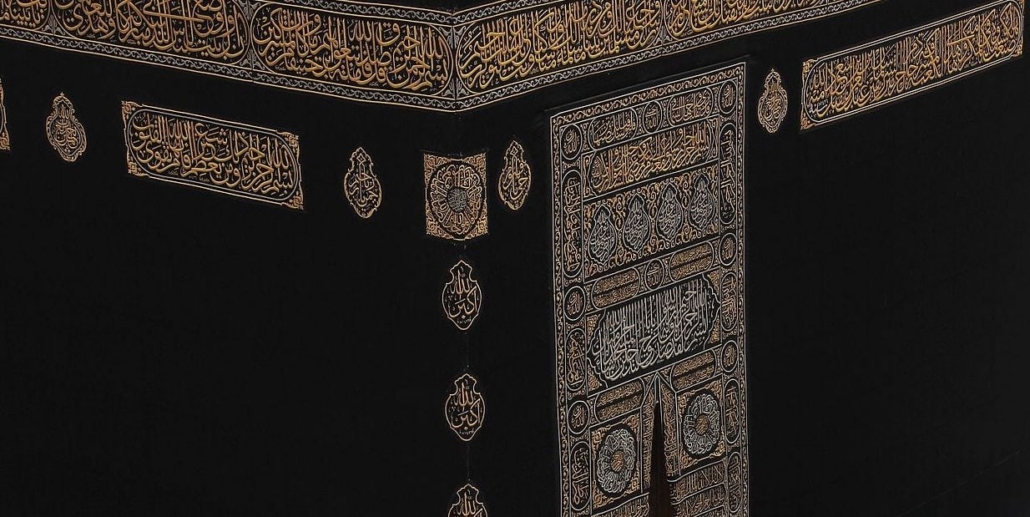
Is It Permissible to Paint the Kaaba, Its Covering, or Its Door?
Hanafi Fiqh
Answered by Shaykh Faraz Rabbani
Question
Is it permissible to paint the Kaaba, its covering (Kiswa), or its door? Would doing so be sinful or disrespectful?
Answer
In the Name of Allah, the Benevolent, the Merciful.
I pray this finds you in the best of faith and health.
Any physical work on the Kaaba—the Kiswa or the door—belongs to the legitimate authority entrusted with the Sacred House. No individual undertakes it.
As for artistic depiction—whether in painting, photography, or calligraphy—it is permitted, provided it is treated with respect.
Allah Most High says: “Whoever venerates the rites of Allah — that is from the piety of hearts.” [Quran 22:32; Keller, The Quran Beheld]
The Sacred House was raised by Ibrahim and Ismail (peace be upon them both) at His command [Quran 2:127; Keller, The Quran Beheld]. The believer’s duty toward it is veneration (tazim)—not innovation or alteration.
The Hanafi scholars regard the Sacred Mosque as the most honored of places. Ibn Abidin explains that caring for it is the duty of the just imam or of those appointed as its custodians. The annual Kiswa, the cleaning of its interior, and the restoration of its door are all carried out under this authority.
Depicting the Kaaba in art is a separate matter. It is permitted to hang or paint images of the Kaaba, as long as these images are treated with care and not placed where they would be disrespected or used in a trivial way.
Veneration Is the Believer’s Stance Toward the Sacred House
The Kaaba is the qibla of the believers. Its care is entrusted to those appointed for this honor.
Express your love for it through veneration, in your art, in your supplication, and in your longing to stand before it.
May Allah grant you the gaze of those whose hearts are moved to tears when they behold it.
And Allah knows best.
[Shaykh] Faraz Rabbani
Related Answers
Explains the permissibility of displaying sacred images and Quranic verses as decoration
Clarifies the origins and virtues of the Black Stone
Discusses whether touching or kissing the Kaaba during ahram affects one’s pilgrimage state or incurs any expiation
4. The Meaning of the Black Stone-Shaykh Abdul Hakim Murad.
Reflects on the spiritual symbolism of the black stone and its role as a sign of covenant, love, and submission to Allah
Shaykh Faraz Rabbani is a recognized specialist scholar in the Islamic sciences, having studied under leading scholars from around the world. He is the Founder and Executive Director of SeekersGuidance.
Shaykh Faraz stands as a distinguished figure in Islamic scholarship. His journey in seeking knowledge is marked by dedication and depth. He spent ten years studying under some of the most revered scholars of our times. His initial studies took place in Damascus. He then continued in Amman, Jordan.
In Damascus, he was privileged to learn from the late Shaykh Adib al-Kallas. Shaykh Adib al-Kallas was renowned as the foremost theologian of his time. Shaykh Faraz also studied under Shaykh Hassan al-Hindi in Damascus. Shaykh Hassan is recognized as one of the leading Hanafi jurists of our era.
Upon completing his studies, Shaykh Faraz returned to Canada in 2007. His return marked a new chapter in his service to the community. He founded SeekersGuidance. The organization reflects his commitment to spreading Islamic knowledge. It aims to be reliable, relevant, inspiring, and accessible. This mission addresses both online and on-the-ground needs.
Shaykh Faraz is also an accomplished author. His notable work includes “Absolute Essentials of Islam: Faith, Prayer, and the Path of Salvation According to the Hanafi School,” published by White Thread Press in 2004, which is a significant contribution to Islamic literature.
His influence extends beyond his immediate community. Since 2011, Shaykh Faraz has been recognized as one of the 500 most influential Muslims. This recognition comes from the Royal Islamic Strategic Studies Center. It underscores his impact on the global Islamic discourse.
Shaykh Faraz Rabbani’s life and work embody a profound commitment to Islamic scholarship. His teachings continue to enlighten and guide seekers of knowledge worldwide.
