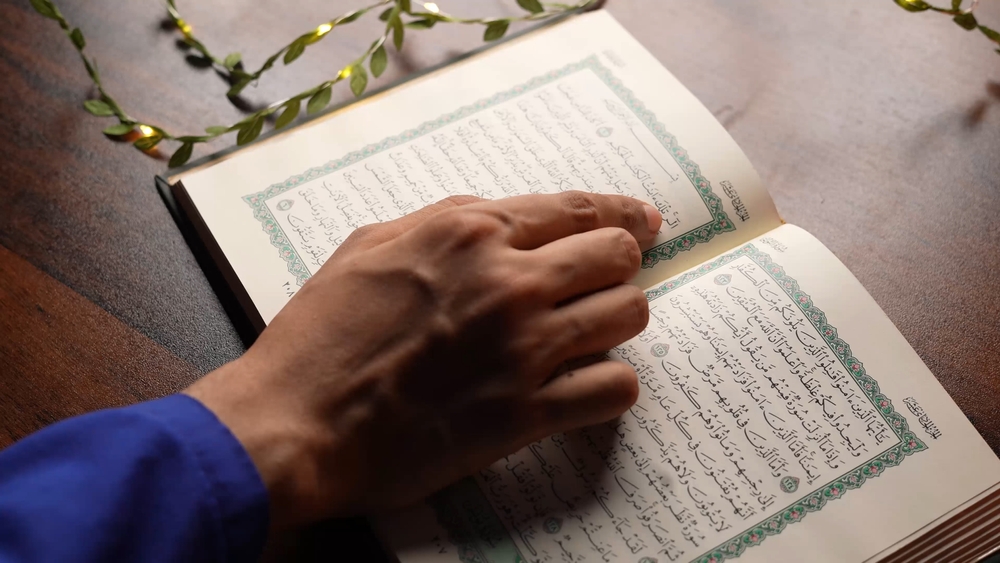
Can I Use Surah al-Rahman as a Treatment for Mental Health?
Hanafi Fiqh
Answered by Shaykh Abdul-Rahim Reasat
Question
I would like to know whether this “Surah Ar-Rahman therapy”—listening to Qari Abdul Basit, then drinking water while saying “Allah” three times—is permissible for mental health issues, alongside treatment from a psychologist.
Answer
In the name of Allah, the All-Merciful, the Ever-Merciful.
All praise belongs to Allah, Lord of all beings, and may peace and blessings be upon our master Muhammad.
I have not come across any basis for this form of therapy, and I’m pretty sure it’s not something from any of the classical sources.
There is no harm in trying it, as it does not involve anything impermissible, but do not let anyone pass this off as Islamic therapy.
Usually, the means of healing from a particular illness are the standard conventional means that Allah has given us.
The Messenger of Allah, Allah bless him and give him peace, said, “Allah has not manifested an illness except that He has manifested for it a cure.” [Bukhari]
If you do have long-standing physical or mental health issues, go to a professional. It’s better than putting your hopes in the hands of a charlatan who uses the religion as the basis of his authority in a field he is not qualified to comment on.
There is a reason why doctors have something called peer review. This prevents wild and lucky claims about X, Y, and Z being a miracle cure. Approaches are tested systematically, and something that falls short doesn’t become mainstream medicine.
Even alternative medicines such as traditional Chinese medicine and homeopathy fall into this bracket of systematically tested approaches. Consider one of these if medication or therapy doesn’t work.
May Allah give you ease and well-being.
[Shaykh] Abdul-Rahim Reasat
Checked and Approved by Shaykh Faraz Rabbani
Shaykh Abdul-Rahim Reasat began studying Arabic Grammar and Morphology whilst studying for a degree in English and History. After graduating, He traveled to Damascus and studied Arabic, Hanafi Fiqh, Usul al-Fiqh, Theology, and Logic with Shaykh Adnan Darwish, Shaykh ‘Abd al-Rahman Arjan al-Binsawi, Shaykh Husayn Darwish, Shaykh Muhammad Darwish, the late Shaykh Rashad Shams, and others. He then moved to Amman to continue his studies in those fields, as well as in Tafsir, Quranic Sciences, Hadith Methodology and Commentary, Prophetic Biography, Prophetic Perfections and Traits, Rhetoric, Arabic Literature, and Tajwid. His teachers include Shaykh Ali Hani, Dr. Hamza al-Bakri, Dr Salah Abu al-Hajj, Dr Mansur Abu Zina, Shaykh Ahmad Hasanat, Shaykh Ahmad Jammal, and others.
