Is Verbally Warning Snakes Before Removing Them Considered a Sunna? (copy)
Shafi'i Fiqh
Answered by Shaykh Irshaad Sedick
Question
Is it confirmed in the Sunna to verbally warn pests before removing or killing them? Does this apply to all types of pests?
Answer
In the Name of Allah, the Most Merciful and Compassionate.
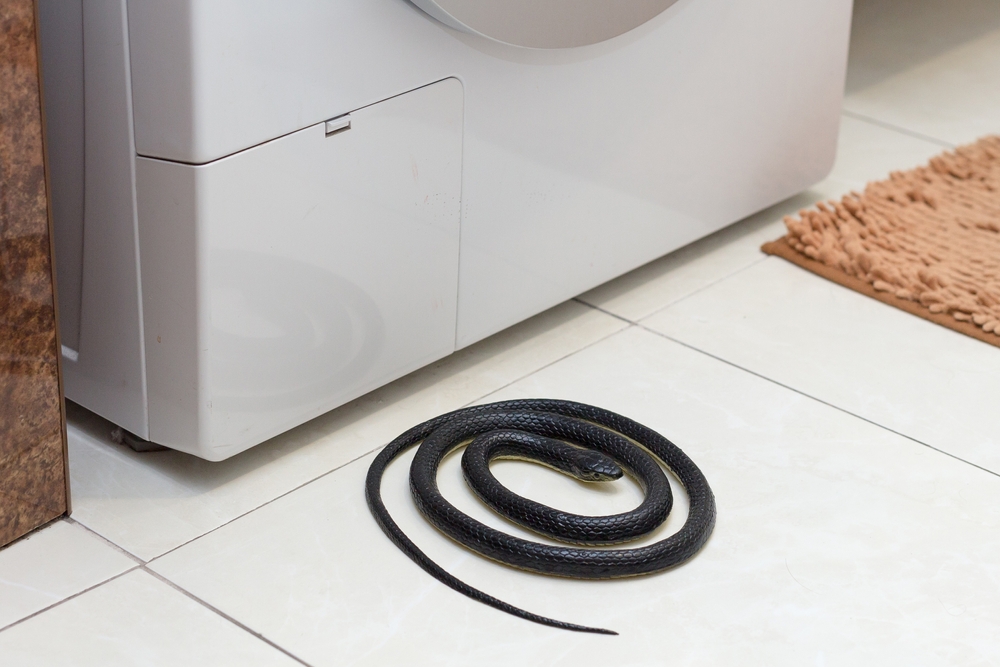
It is confirmed in the Sunna that a snake found inside the home should be verbally warned before being killed, based on authentic hadiths. Scholars disagree on whether this applies only in Madina or everywhere. This ruling does not apply to other household pests, such as insects or rodents.
The Prophet (Allah bless him and give him peace) explained that some house snakes could be jinn who have accepted Islam. Because of this, he instructed people to warn these snakes before killing them.
Hadith on Snakes in Madina’s Homes
Abu al-Sa‘ib reported that the Prophet (Allah bless him and give him peace) said: “There are in Madina jinn who have accepted Islam, so when you see any one of them, pronounce a warning to it for three days, and if they appear before you after that, then kill it, for that is a devil.” [Muslim]
And in a related narration with variant wording and a different chain:
“Verily, in these houses there live aged snakes, so when you see one of them, make life hard for it for three days, and if it goes away, well and good; otherwise kill it, for in that case it would be a disbeliever.” [Muslim]
Ibn Hajar al-Haytami (Allah have mercy on him) said, “As for the snakes that reside inside houses, they are not to be killed until they have been warned thrice. The scholars held different views on whether the intended meaning is three days or three times. The first is the view adopted by the majority… The most likely correct view is that warning (the harmless house snake) is recommended, though the statements of some Hanbali scholars suggested that it is obligatory…” [Haytami, al-Fatawa al-Fiqhiyya al-Kubra]
As for the wording of the warning, Ibn Abd al-Barr (Allah have mercy on him) recorded that one says: “I urge you, O snake, not to appear before us or harm us.” This is said three times over three days. [Ibn Abd al-Barr, al-Tamhid]
Scope of the Ruling: Madinah or Everywhere?
Scholars differed on whether the warning applies specifically to snakes in Madina or to all house snakes worldwide. Imam Nawawi wrote, “Maziri said, ‘The snakes in the city of the Prophet should not be killed unless they have been warned, as stated in these narrations. If they are warned but do not go away, one may kill them. As for snakes in other than Madina, in different parts of the world and houses and buildings, it is recommended to kill them without warning, given the general indication of the authentic narrations commanding killing them.’” [Nawawi, Sharh Sahih Muslim]
What about other pests?
There is no similar practice of warning for insects, rodents, or other household pests. In general, killing harmful creatures is allowed when necessary, but care should be taken to avoid unnecessary suffering.
Care and Consideration for Creation
The main principle is to show care and consideration for all creatures, even when removing something harmful. If you find a non-venomous snake in your home, verbally warn it three times over three days before taking any action. If the snake stays or becomes dangerous, it can be killed. For insects, rodents, or other pests, no warning is needed, but they should still be treated humanely.
And Allah (Most High) knows best.
[Shaykh] Irshaad Sedick
Checked and Approved by Shaykh Faraz Rabbani
Shaykh Irshaad Sedick was raised in South Africa in a traditional Muslim family. He graduated from Dar al-Ulum al-Arabiyyah al-Islamiyyah in Strand, Western Cape, under the guidance of the late world-renowned scholar Shaykh Taha Karaan (Allah have mercy on him), where he taught.
Shaykh Irshaad received Ijaza from many luminaries of the Islamic world, including Shaykh Taha Karaan, Shaykh Muhammad Awama, Shaykh Muhammad Hasan Hitu, and Mawlana Abdul Hafeez Makki, among others.
He is the author of the text “The Musnad of Ahmad ibn Hanbal: A Hujjah or not?” He has been the Director of the Discover Islam Center and, for six years, the Khatib of Masjid Ar-Rashideen, Mowbray, Cape Town.
Shaykh Irshaad has 15 years of teaching experience at some of Cape Town’s leading Islamic institutes. He is currently building an Islamic podcast, education, and media platform called ‘Isnad Academy’ and has completed his Master’s degree in the study of Islam at the University of Johannesburg. He has a keen interest in healthy Prophetic living and fitness.
