Is It Better to Make Long Dua or Pray Tahajjud in Last Third of the Night?
Hanafi Fiqh
Answered by Shaykh Faraz Rabbani
Question
Is it better to make a lengthy supplication in the last third of the night, or to use that time for more Tahajjud and make the long supplication during the day?
Answer
In the name of Allah, the Most Merciful and Compassionate.
May Allah accept your devotion and grant you closeness to Him in the blessed hours of the night.
What Supplication Is, and Why Lengthening It Is Beloved
Supplication (dua) is at the heart of worship. Imam Ghazali, as explained by Zabidi, says that its reality is to show our need, humility, and lowliness before Allah. This is why the Prophet (Allah bless him and give him peace) called it ‘the marrow of worship.’
Making supplication longer and persisting in it is beloved to Allah. It is encouraged to prolong our calling and pleading to Him.
A believer seeks to make the most of every opportunity for good. If you are awake in the last third of the night and feel moved to make a long supplication, do so at that time.
This is a special hour when prayers are answered. Do not delay the good that comes to your heart.
The Last Third: The Best Time for Long Supplication
The night prayer (tahajjud) is, in itself, greater than a long supplication. But the best action is not always the same for everyone. It depends on your state and what Allah opens for you at that moment.
Ibn Ata’illah (Allah have mercy on him) said, ‘The kinds of works vary because the states of the heart vary.’ The scholars explain that our outward actions follow the state of our hearts. Each moment has a right that Allah asks from us.
Tahajjud and Supplication: Completing Each Other
Imam Ghazali teaches that we should act in accordance with our state and the moment. The duty of each servant is to fulfill what is due in their state. So, if you are moved to make a long supplication in the last third of the night, keep it in that blessed time.
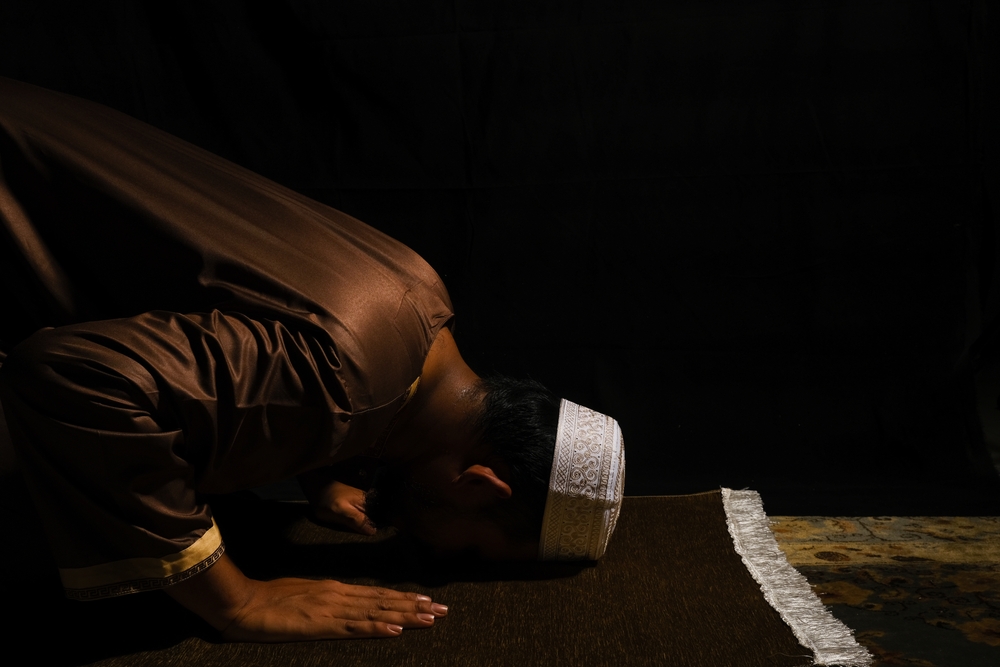
It is best to make your dua within the prayer, especially in prostration, or after the prayer. In this way, your tahajjud and your supplication support each other.
Making a long supplication during the day is good and rewarded, but it does not have the special hope of acceptance that the last third of the night brings.
There is no benefit in moving it away from that hour.
The Standing of the Last Third of the Night
That hour is honored by the Prophet’s own words (Allah bless him and give him peace): “Our Lord descends each night to the nearest heaven when the last third of the night remains, and says, ‘Who is calling upon Me, that I may answer him?
Who is asking of Mme that I may give him? Who is seeking My forgiveness, that I may forgive him?’” [Bukhari, no. 1094; Muslim, no. 758] And he said that the best prayer after the obligatory is the night prayer [Muslim, no. 1163].
Give that hour both your prayer and your supplication. Take on what you can sustain, for Allah loves actions done consistently, even if they are small.
And Allah knows best.
[Shaykh] Faraz Rabbani
Related SeekersGuidance Answers
Tahajjud Prayer: How and When to Pray It, and Its Merits
A practical guide to performing Tahajjud, explaining its timing, method, and the immense virtues of worship in the depths of the night.
The Ruling and Virtues of the Night Prayer
Explores the legal status of voluntary night prayer and highlights its spiritual benefits and transformative effects on the believer.
A Reader on Night Worship and the Night Vigil (Tahajjud)
A curated collection of Qur’anic verses, hadiths, and scholarly insights on the merits, etiquette, and spiritual significance of night worship.
Shaykh Faraz Rabbani is a recognized specialist scholar in the Islamic sciences, having studied under leading scholars from around the world. He is the Founder and Executive Director of SeekersGuidance.
Shaykh Faraz stands as a distinguished figure in Islamic scholarship. His journey in seeking knowledge is marked by dedication and depth. He spent ten years studying under some of the most revered scholars of our times. His initial studies took place in Damascus. He then continued in Amman, Jordan.
In Damascus, he was privileged to learn from the late Shaykh Adib al-Kallas. Shaykh Adib al-Kallas was renowned as the foremost theologian of his time. Shaykh Faraz also studied under Shaykh Hassan al-Hindi in Damascus. Shaykh Hassan is recognized as one of the leading Hanafi jurists of our era.
Upon completing his studies, Shaykh Faraz returned to Canada in 2007. His return marked a new chapter in his service to the community. He founded SeekersGuidance. The organization reflects his commitment to spreading Islamic knowledge. It aims to be reliable, relevant, inspiring, and accessible. This mission addresses both online and on-the-ground needs.
Shaykh Faraz is also an accomplished author. His notable work includes “Absolute Essentials of Islam: Faith, Prayer, and the Path of Salvation According to the Hanafi School.” This book, published by White Thread Press in 2004, is a significant contribution to Islamic literature.
His influence extends beyond his immediate community. Since 2011, Shaykh Faraz has been recognized as one of the 500 most influential Muslims. This recognition comes from the Royal Islamic Strategic Studies Center. It underscores his impact on the global Islamic discourse.
Shaykh Faraz Rabbani’s life and work embody a profound commitment to Islamic scholarship. His teachings continue to enlighten and guide seekers of knowledge worldwide.
Sources
- Ghazali, Ihya Ulum al-Din (with Zabidi, Ithaf al-Sada al-Muttaqin): «الدعاء ليس إلا إظهار غاية التذلل والافتقار والاستكانة»؛ «وتطويل المناجاة والتضرع إلى الله فيها مشروع»؛ «فيعمل كل شيء بما يقتضيه الوقت والحال»؛ «فرض كل عبد القيام بحكم حاله».
- Hadith: «الدعاء مخ العبادة» (as related in Ghazali, Ihya Ulum al-Din).
- Ibn Ata’illah, al-Hikam: «تنوّعت أجناس الأعمال لتنوّع واردات الأحوال».
- Ibn Abbad, Ghayth al-Mawahib al-Aliyya: «الأعمال الظاهرة تابعة أبداً لأحوال القلوب الباطنة»؛ عن الشاذلي: «إن لكل وقت سهماً يقتضيه الحق منك بحكم الربوبية».
- Bukhari, no. 1094; Muslim, no. 758: «ينزل ربنا تبارك وتعالى كل ليلة إلى سماء الدنيا حين يبقى ثلث الليل الآخر، فيقول: من يدعوني فأستجيب له، من يسألني فأعطيه، من يستغفرني فأغفر له».
- Muslim, no. 1163: «أفضل الصلاة بعد الفريضة صلاة الليل».
