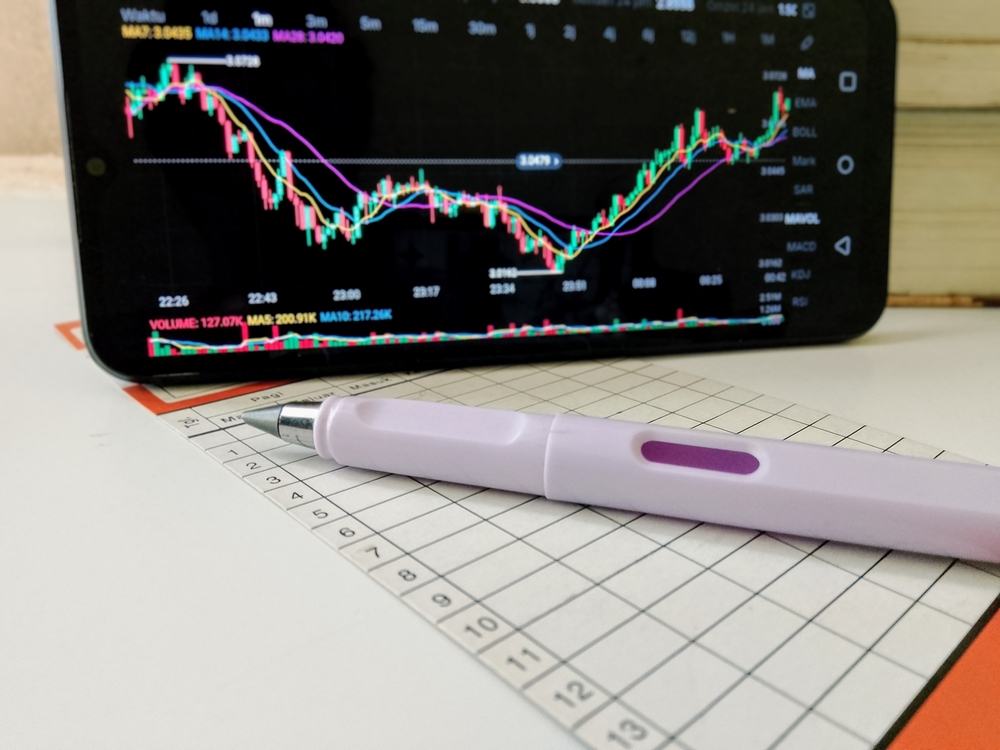
Is Demo-Account Trading for a Prop Firm Permissible If No Real Transactions Occur?
Shafi'i Fiqh
Answered by Shaykh Muhammad Carr
Question
I seek clarification regarding proprietary trading models in which the trader operates only on a demo account. No real leveraged trades, interest-based transactions, or financial contracts are executed in the trader’s name. The trader effectively generates trading signals and receives compensation based on performance.
In this case, is participating in such a model permissible, given that no actual financial transaction occurs under the trader’s ownership?
Answer
In the Name of Allah, the Most Merciful and Compassionate.
Thank you for your question. May Allah reward you for ensuring that your income is permissible.
Participation in a demo-account trading platform of the kind described above is impermissible, notwithstanding the absence of actual financial transactions. Any compensation earned therefrom is, by extension, equally impermissible.
In a service contract (ijara), the service rendered (manfa‘a) must possess legal value. Simulating an impermissible service carries no such value. [Khatib, Mughni al-Muhtaj]
Such an exchange falls within the category of falsehood. Allah says: “O you who believe, do not consume one another’s wealth through falsehood, but only through trade conducted by mutual consent.” [Quran 4:29]
Demo Trading
Demo trading replicates all the essential elements of an actual trade while dispensing with real-world consequences.
Simulating impermissible actions is itself impermissible on three grounds: first, it involves training and developing proficiency toward actual execution; second, it engenders desensitization to what is unlawful; and third, it constitutes a form of implicit endorsement through performance (istihlal fi‘li).
Simulation is further analogous to imitation (tashabbuh). Ibn Hajar al-Haytami states that if permissible coffee were to be served in the manner of wine, it would become impermissible, and if served otherwise, it would not. [Fatawa al-Fiqhiyya al-Kubra] This ruling applies with even greater force to direct simulation.
Doing the Best with your Property and Expertise
Allah exhorts us not to approach property save in the most beneficial manner [Quran 6:152]. Ibn Abbas interprets “the most beneficial manner” as a prudent investment that preserves the principal and yields sound returns. Engage in the real economy to access the blessings, the baraka, that Allah has placed in wealth.
And Allah knows best.
[Shaykh] Muhammad Carr
Checked and Approved by Shaykh Faraz Rabbani
Shaykh Muhammad Carr has dedicated his life to studying and transmitting our beautiful deen. His studies have taken him around the globe, where he has benefited from many luminaries. Under the guidance of his teachers – Shaykh Taha Karan, Shaykh Yaseen Abbas, Shaykh Muadh Ali, and many others – Shaykh Muhammad has grown to appreciate the beauty and benefits of diverse scholarship. He completed his memorization of the Qur’an at Dar al-Ulum Zakariyyah in September 1997 and received an Alimiyya Degree in 2006 from DUAI (Darul Ulum al-Arabiyyah al-Islamiyyah). He is also affiliated with Masjid Auwal in Bo Kaap, Cape Town (the oldest mosque in South Africa), where he serves as a co-imam, and Dar Al-Safa, where he has taught since 2018. As a teacher, he imparts the wisdom of our heritage and tradition by opening the door to students. As an imam, he has the unique opportunity to serve his community in daily life.
In addition to his roles as a teacher and imam, Shaykh Muhammad Carr has contributed significantly to the administrative and advisory aspects of Islamic institutions. Since 2023, he has served as the Administrative Director at The Imam Kurani Institute, contributing to the institution’s growth and development. He continues to pursue traditional Islamic Sciences, possessing a keen interest in Islamic Contract Law and Finance. Shaykh Muhammad has been a Shari‘a Board Member for Islamic Asset Management & Insurance Companies since 2001, aligning financial practices with Islamic principles.
