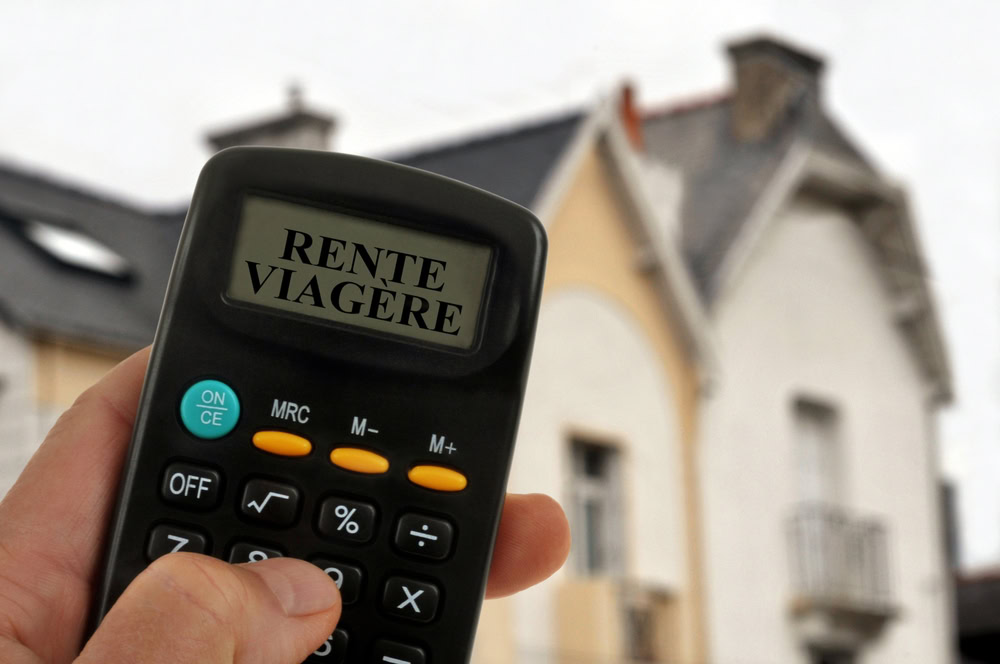
Is It Permissible to Purchase a House Through a Life Annuity Contract?
Shafi'i Fiqh
Answered by Shaykh Muhammad Carr
Question
In a country without Islamic banks, is it permissible to purchase a house through a life annuity contract, where the buyer pays a reduced price along with monthly installments for a fixed period, while the current owner continues to live in the house until the contract term ends?
Answer
In the Name of Allah, the Most Merciful and Compassionate.
I pray you are in good faith and health. Thank you for your question.
The life annuity component reflects the purpose for which the sale is undertaken. However, it does not alter the fundamental nature of the underlying contract, which remains a sale.
If all the conditions for a valid sale are satisfied, it is permissible for you to purchase a house through a life annuity arrangement. Most importantly, the price and the terms of payment must be fixed.
A key condition of a valid sale is that the price and its equivalent must be known—not necessarily in every detail, but sufficiently so: the physical item must be identified if the sale is in rem, and the amount and quality must be specified if the sale is in personam. [See Khatib, Mughni al-Muhtaj]
Avoiding Contractual Risk
If the buyer has to pay the annuity until the seller’s death, the contract is compromised. Given this viewpoint, the sale in-life-annuity is a game of chance which can benefit either the seller, or the buyer, or be neutral. Everything depends on the seller’s life span. This is a contractual risk that the Prophet (Allah bless him and give him peace) prohibited. [Muslim]
Nobody can know the seller’s date of death. Therefore, it represents a risk for both the seller, who may die quickly and therefore not benefit much from the pension, and for the buyer, who may have to pay the annuity for longer than they had imagined if the seller lives for a long time.
Why We Should Accommodate a Viager
Viager has an altruistic element to it as is clear from the following, “In addition to the unique financial advantages for sellers (often new widows or widowers who need the regular source of income that the payments offer) and buyers (homes at reduced rates), viagers also offer tax breaks for sellers.” [Investopedia] In Islamic Law, altruism relaxes the strict laws that govern purely commutative transactions. The contracting parties ultimately decide on the terms of the arrangement. Viager agreements are often negotiated privately with a lawyer, leaving out banks and insurance companies. [Ibid]
Furthermore, it is an alternative to the categorically impermissible interest-based loan.
The Annuitant Remaining in the Property
Parallel agreements can facilitate the annuitant’s stay in the property. This could take the form of a unilateral promise by the buyer to allow the seller to occupy the property after purchase. Such a promise is considered binding.
It can also be facilitated by adopting the view of scholars who permit a sale with an added condition. The Prophet (Allah bless him and give him peace) said, “Muslims are upon their conditions.” [Abu Dawud]. Ahmad Ibn Hanbal mentioned that Muhammad ibn Maslama bought a bundle of wood from a Nabatean and stipulated that he deliver it to Sa‘d’s castle. Abdullah ibn Mas‘ud purchased a slave from his wife, and she stipulated that if he ever sold it, he must sell it to her at the initial sale price. [Zuhayli, Bay‘ al-‘Urbun]
Payment Terms
To facilitate that the annuitant receives monthly payments for the rest of their lives without compromising the Sharia integrity of the sale, the payment amount and terms should be fixed for a period that the seller is not expected to outlive. Upon the seller’s death, any outstanding liability for the remaining payments is extinguished. This is facilitated by a waiver from the seller (nadhr) that exonerates them from the outstanding balance.
Viager
A house purchase through a life annuity product (often called a viager in civil law systems like France) works as follows:
- The seller (annuitant) sells their house to a buyer (annuity payer).
- Instead of paying the full market price upfront, the buyer pays a reduced lump sum (called a bouquet) at the start.
- The buyer then makes regular payments (life annuity payments) to the seller—usually monthly—for the rest of the seller’s life or for a fixed term.
- The seller often retains the right to live in the property (usufruct or lifetime residence right) until death or until the contract period ends.
- When the seller passes away (or the contract term expires), the buyer gains full ownership and possession of the property.
Essentially, it’s a way for elderly homeowners to convert their property’s value into a steady income while continuing to live in it, and for buyers to acquire property at a discount, with deferred access.
And with Allah alone is our success.
[Shaykh] Muhammad Carr
Checked and Approved by Shaykh Faraz Rabbani
Shaykh Muhammad Carr has dedicated his life to studying and transmitting our beautiful deen. His studies have taken him around the globe, where he has benefitted from many luminaries. Under the guidance of his teachers – Shaykh Taha Karan, Shaykh Yaseen Abbas, Shaykh Muadh Ali, and many others – Shaykh Muhammad has grown to appreciate the beauty and benefits of diverse scholarship. He completed his memorization of the Qur’an at Dar al-Ulum Zakariyyah in September 1997 and received an Alimiyya Degree in 2006 from DUAI (Darul Ulum al-Arabiyyah al-Islamiyyah). He is also affiliated with Masjid Auwal in Bo Kaap, Cape Town (the oldest mosque in South Africa), where he serves as a co-imam, and Dar Al-Safa, where he has taught since 2018. As a teacher, he imparts the wisdom of our heritage and tradition by opening the door to students. As an imam, he has the unique opportunity to serve his community in daily life.
In addition to his roles as a teacher and imam, Shaykh Muhammad Carr has contributed significantly to the administrative and advisory aspects of Islamic institutions. Since 2023, he has served as the Administrative Director at The Imam Kurani Institute, contributing to the institution’s growth and development. He continues to pursue traditional Islamic Sciences, possessing a keen interest in Islamic Contract Law and Finance. Shaykh Muhammad has been a Shari‘a Board Member for Islamic Asset Management & Insurance Companies since 2001, aligning financial practices with Islamic principles.
