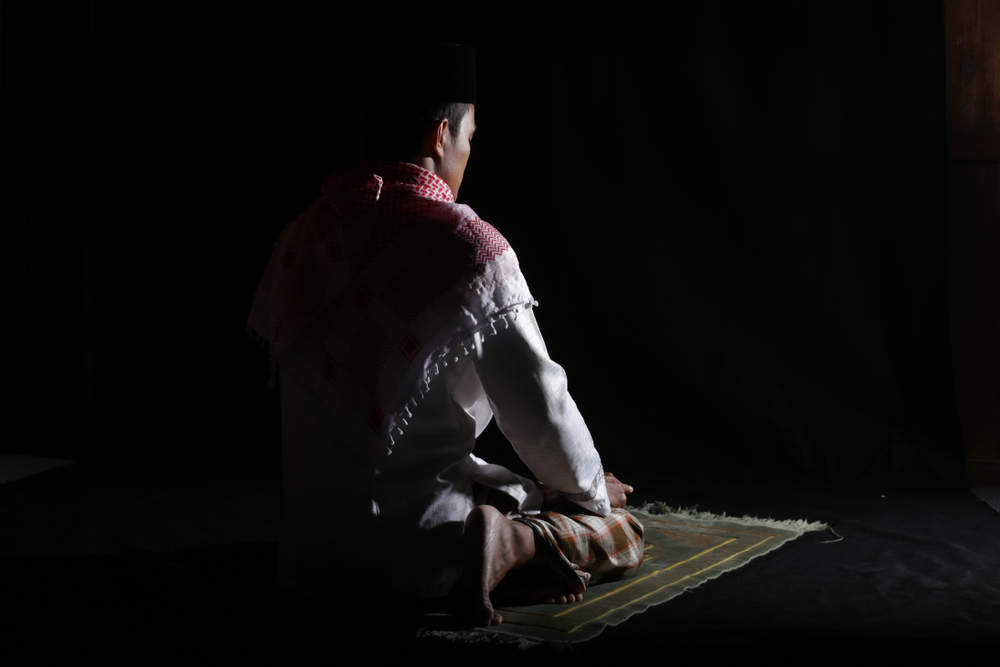
What the Night Means: The Timing, Ruling, and Merits of the Night Prayer
Hanafi Fiqh
Answered by Shaykh Faraz Rabbani
Question
The night (al-layl) begins at Maghrib. But I know that night prayer (qiyam al-layl) is specifically after Isha.
My question: when the Quran and hadith describe the virtue of worshipping at night, do they mean only after Isha—or does any act of worship from Maghrib to Fajr carry that virtue?
Answer
In the Name of Allah, the Most Merciful and Compassionate
May Allah reward your careful seeking, and make you of the people of the night.
The answer has two parts:
One. The night begins at Maghrib.
Two. The night prayer (salat al-layl), the Quran, and hadith praise so abundantly, meaning voluntary prayer offered between Isha and Fajr.
Worship from Maghrib to Fajr carries merit. But the special quality of “night prayer” the texts single out belongs to the Isha-to-Fajr window, and most especially to its last third.
When the Night Begins: Maghrib Sets the Hour
The night (al-layl) begins the moment the day (al-nahar) ends — at the disappearance of the sun’s disc below the horizon.
The Quran establishes this in the verse on the fast: “Complete your fast until the night.” [Quran 2:187]
The fast breaks at Maghrib by consensus. So Maghrib is when night begins. [Ibn Abidin (d. 1252 AH), Radd al-Muhtar, 1/460; al-Shurunbulali (d. 1069 AH), Maraqi al-Falah, 321]
Merits of Voluntary Prayers Between Maghrib and Isha
Voluntary prayers between Maghrib and Isha are night prayers in this general sense.
The Hanafi scholars even count make-up prayers (qada) performed at night among them, on the strength of the Prophet’s saying (Allah bless him and give him peace): “Any prayer offered after the nightfall prayer (Isha) is deemed a night prayer.” [Tabarani; and see al-Nabulusi (d. 1143 AH), Nihaya al-Murad, 652–5]
Ibn Nujaym in al-Bahr al-Ra’iq draws the practical conclusion. The sunna of night prayer is fulfilled by supererogatory prayers offered after Isha before going to sleep.
Three Terms—Salat al-Layl, Qiyam al-Layl, Tahajjud
The terms night prayer (salat al-layl) and night vigil (qiyam al-layl) cover any voluntary prayer from Isha to Fajr. The term tahajjud is more specific. [Ibn Abidin, Radd al-Muhtar, 1/460]
In short, every tahajjud is qiyam al-layl. Not every qiyam al-layl is tahajjud.
What “Tahajjud” Means: Leaving Sleep
The lexicographers explain the meaning. Majd al-Din Ibn al-Athir (d. 606 AH) (Allah have mercy on him), explains that tahajjud means “to remove sleep (hujud).”
The verb-form indicating removal, just as tahannuth means removing sin and tahawwub means removing fault. [Ibn al-Athir, al-Nihaya, “h-j-d”]
Al-Raghib al-Isfahani (d. 502 AH) (Allah have mercy on him) observes the same root. Hajada means he slept.
Tahajjada means “he roused himself from sleep at night” — the word carrying within it the labor of leaving the bed. [al-Raghib, al-Mufradat, “h-j-d”]
Tahajjud is a night prayer offered after first sleeping. Its name clarifies rather.
A Confirmed Sunna: The Strongest Hanafi Position
Night prayer is a confirmed sunna (sunna mu’akkada).
Imam Kamal al-Din Ibn al-Humam (d. 861 AH) (Allah have mercy on him) examined the question in Fath al-Qadir.
The Prophetic verbal statements indicate strong recommendation (mandub). But the Prophet’s constant practice indicates a confirmed sunna.
The stronger position is the second.
The Prophet (Allah bless him and give him peace) continued to practice it after its obligatory status was abrogated. [Ibn al-Humam/Marghinani, Fath al-Qadir Sharh al-Hidaya; Nabulusi, Nihayat al-Murad; Ibn Abidin, Radd al-Muhtar]
Number, Length, and the Hanafi Fatwa
The minimum is two cycles of prayer (rak’as). The median is four. The optimal is eight.
The Hanafi fatwa position, per al-Barjandi, is that night prayers are performed in sets of two rak’as with one closing salutation (taslima).
Abu Hanifa also permitted sets of four. [Nabulusi, Nihaya al-Murad; Shurunbulali; Ibn Abidin, Radd al-Muhtar; see also: al-Azem, Prayers of Occasions]
A small number of rak’as with prolonged Quran recitation in standing is superior to many brief rak’as.
The Prophet (Allah bless him and give him peace) said: “The best prayer is lengthy standing.” [Muslim; Tirmidhi; Ibn Maja; Ahmad]
What the Quran Says
Allah Most High opened an entire chapter with this command. He said to the Prophet (Allah bless him and give him peace), and through him to every sincere believer:
{يَا أَيُّهَا الْمُزَّمِّلُ قُمِ اللَّيْلَ إِلَّا قَلِيلًا نِّصْفَهُ أَوِ انقُصْ مِنْهُ قَلِيلًا أَوْ زِدْ عَلَيْهِ وَرَتِّلِ الْقُرْآنَ تَرْتِيلًا إِنَّا سَنُلْقِي عَلَيْكَ قَوْلًا ثَقِيلًا إِنَّ نَاشِئَةَ اللَّيْلِ هِيَ أَشَدُّ وَطْئًا وَأَقْوَمُ قِيلًا إِنَّ لَكَ فِي النَّهَارِ سَبْحًا طَوِيلًا وَاذْكُرِ اسْمَ رَبِّكَ وَتَبَتَّلْ إِلَيْهِ تَبْتِيلًا}
“O you who wrap yourself up in your raiment: Rise and stand the night in prayer, save for a little: For a half of it, or slightly less; Or more than that. And recite the Quran with measured, fair, moving distinctness. Verily, we shall cast upon you a pressing, weighty word: Truly, the works that thrive in the night are stronger in firming the good into place, and better for soulful words. Verily, through the labors of the day, you have a long way to swim. And invoke in remembrance the Name of your Lord; and turn to Him from all else in utter devotion.” [Quran 73:1–8; Keller, The Quran Beheld]
Razi on Nashi’at al-Layl: The Senses Fall Silent
The Quran commentators (mufassirun) name what the night does that the day cannot.
Imam Fakhr al-Din al-Razi (d. 606 AH) (Allah have mercy on him) observes that the night is when the senses fall silent.
Free of distraction, the heart turns to the rising thoughts of the night (nashi’at al-layl) — its luminous intuitions, its openings of unseen knowledge, the divine address the soul can hear when nothing else competes for it. [Razi, Mafatih al-Ghayb, on Quran]
Biqa’i on the Aim: Cut Away to Allah Alone
Imam Burhan al-Din al-Biqa’i (d. 885 AH) (Allah have mercy on him) ties the night vigil to the command that follows: “And invoke in remembrance the Name of your Lord; and turn to Him from all else in utter devotion.” [Quran 73:8]
Night prayer is the workshop where the heart learns to cut away from all save Allah, and rest in Him alone. [Biqa’i, Nazm al-Durar, on Quran 73:7–8]
Alusi and Nasafi on Wat’an: Inner-Outer Harmony
Imam Mahmud al-Alusi (d. 1270 AH) (Allah have mercy on him) and Imam Hafiz al-Din al-Nasafi (d. 710 AH) (Allah have mercy on him) read “stronger in firming the good into place” (ashaddu wat’an) as describing the harmony between inner and outer, the night uniquely permits.
The voices are quiet. The movements are stilled. The recitation is firmer, the heart more attentive, the worship furthest from any thought of being seen. [Alusi, Ruh al-Maani; Nasafi, Madarik al-Tanzil, on Quran 73:6]
Ibn Ajiba: Different Forms for Different Stations
Imam Ibn Ajiba (d. 1224 AH) (Allah have mercy on him) deepens the address. The verse calls “O you who wrap yourself up” (al-muzzammil) — but for the seeker, the meaning is also: “O you enveloped in sciences, gnosis, and secrets — stand the night in gratitude for the abundant blessings bestowed upon you.”
Night prayer takes different forms by station. For worshippers (ubbad) and ascetics (zuhhad), it is recitation, supplication, and seeking forgiveness in the pre-dawn hour. For those who know Allah (arifin), it is the contemplation of witnessing and insight — the continuous prayer of the hearts. [Ibn Ajiba, al-Bahr al-Madid, on Quran 73:1]
“Prostrate and Standing” — Surat al-Furqan 25:64
Allah praises the servants of the Most Merciful (ibad al-Rahman) by this very mark: “And are those who spend their nights in prayer to their Lord prostrate and standing.” [Quran 25:64; Keller, The Quran Beheld]
Imam Abu Su’ud al-Imadi (d. 982 AH) (Allah have mercy on him) and Imam Alusi note the spiritual logic of the order. Allah mentions prostration before standing, even though standing comes first in prayer.
Prostration is the moment the servant is closest to the Lord. The verse leads with what is most precious. [Abu Su’ud, Irshad al-‘Aql al-Salim; Alusi, Ruh al-Maani, on Quran 25:64]
“Their Sides Forsake Their Beds” — Surat al-Sajda 32:16–17
He describes the early generations: “Their sides shy from their very beds hard asleep from toil; Imploring their Lord in fear and hope against hope; And of what We have provided them they expend. So no soul can know what has been hidden for them ahead, of pure joy to set eyes on, repaid in full for all they used to do.” [Quran 32:16–17; Keller, The Quran Beheld]
Imam Biqa’i describes what the verse pictures. They rise from their beds as if stung—unable to rest, their hearts driven by fear of Allah’s threat and hope in His promise. [Biqa’i, Nazm al-Durar, on Quran 32:16]
Imam Alusi adds a quieter point. Just as their bodies leave the bed, their hearts leave any resting on their states or any seeing of their own worth. The worship remains for Allah alone. [Alusi, Ruh al-Maani, on Quran 32:16]
“In the Last Watches of Night” — Surat al-Dhariyat 51:17–18
And He gives this sign of the righteous: “And little indeed of a night slept they hard from their toil; And in the last watches of night did they ever ask forgiveness.” [Quran 51:17–18; Keller, The Quran Beheld]
Imam Razi marks the paradox. After whole nights of weary worship, the righteous spend the pre-dawn hours seeking forgiveness — as if they had slept through the night and were ashamed.
This protects them from self-admiration. Whoever else stood the night this way would imagine no one in creation more righteous. They think only of how short they fell. [al-Razi, Mafatih al-Ghayb, on Quran 51:18]
Imam Biqa’i reads it the same way. They reckon their immense efforts as nothing. Their self-reckoning keeps them small. [al-Biqa’i, Nazm al-Durar, on Quran 51:18]
“An All-Laudable Station” — Surat al-Isra 17:79
Finally, He holds out the greatest of stations as its reward: “And of the night rise and pray with its recital, an extra work of merit for you; haply your Lord may raise you up after death in an all-laudable high station of honor.” [Quran 17:79; Keller, The Quran Beheld]
The scholars identify “all-laudable station” (maqam mahmud) as the Station of Intercession—the highest station the Prophet (Allah bless him and give him peace) will occupy on the Day of Rising.
The verse was addressed to him. Its guidance flows to the community that follows his way. [al-Biqa’i, Nazm al-Durar; al-Razi, Mafatih al-Ghayb, on Quran 17:79]
Imam Alusi marks one further point — addressed to the Prophet (Allah bless him and give him peace), and felt by every lover who has tasted the night.
The Prophet was singled out for tahajjud because the night is the time of exclusive privacy between the Lover and the Beloved. [Alusi, Ruh al-Maani, on Quran 17:79]
What the Prophet (Allah bless him and give him peace) Said
The Prophet (Allah bless him and give him peace) said: “You are encouraged to perform night prayers, for it was the custom of the pious before you, a means of drawing close to your Lord, a penance for your mistakes, and a restraint from sin.” [Muslim]
In a single sentence, four realities of night prayer were mentioned. Night prayer connects you to the tradition of the prophets and their inheritors. It draws you near your Lord. It wipes away wrongs. And shields you from falling into them again.
He said, “The best prayer after the obligatory prayers is the night prayer.” [Muslim]
The Descent of Mercy in the Last Third
In the hadith most beloved of the scholars, agreed upon by Bukhari and Muslim, the Prophet (Allah bless him and give him peace) said: “Our Lord descends each night to the heavens of the earth when one third of the night remains, and says: Who shall call upon Me, such that I may answer him? Who shall ask of Me, such that I may grant him? Who shall seek forgiveness of Me, such that I may forgive him?” [Bukhari; Muslim—agreed upon]
Imam Ibn Abd al-Barr (d. 463 AH) (Allah have mercy on him) recorded in al-Tamhid: “The hadith scholars have no disagreement regarding the authenticity of this hadith.” [Ibn Abd al-Barr, al-Tamhid, 7/128] It is among the most thoroughly transmitted hadiths in the corpus.
What is Meant by Allah’s “Descent”? Ash’ari and Maturidi Readings: Mercy, Not Movement
The Ash’ari and Maturidi theologians, the bearers of the Sunni doctrinal tradition, interpret “descends” as Allah’s special mercy and response, not a spatial movement.
Such a movement is impossible for the One who is beyond direction and place.
Imam Abu Bakr al-Bayhaqi (d. 458 AH) (Allah have mercy on him), in al-Asma’ wa al-Sifat, locates the descent within Allah’s attributes of action (sifat al-fi’l): His mercy descending, His response turning, His attention given to the servant who calls upon Him.
Imam Abu Mansur al-Maturidi (d. 333 AH) (Allah have mercy on him), in Ta’wilat Ahl al-Sunna, walks the same path — affirming what the text affirms while denying any quality that would compromise transcendence. [Bayhaqi, al-Asma’ wa al-Sifat; Maturidi, Ta’wilat Ahl al-Sunna]
What the hadith describes is a singular Divine opening: In the last third of the night, the gates of mercy open wide. The question is only who will be awake to enter.
Spouses Rising Together
The Prophet (Allah bless him and give him peace) also said: “Whoever arises in the night and awakens his spouse, and they perform two rak’as together, both of them are written among those men and women who make much remembrance of Allah.”
[Nasai; Ibn Maja; Ibn Hibban in his Sahih; al-Hakim — graded sahih by Mundhiri (d. 656 AH) on the conditions of Bukhari and Muslim; see al-Targhib wa al-Tarhib]
The family that rises together in the night builds something the daylight hours cannot.
Mundhiri’s Targhib: Mercy on the Sleepless Spouse
In al-Targhib wa al-Tarhib, Imam al-Mundhiri gathers further hadiths on the merits of qiyam al-layl. Among them:
The Prophet (Allah bless him and give him peace) said: “May Allah have mercy on a man who rises in the night to pray, and wakes his wife—and if she refuses, he sprinkles water on her face. And may Allah have mercy on a woman who rises in the night to pray and wakes her husband—and if he refuses, she sprinkles water on his face.” [Abu Dawud; Nasai; Ibn Maja—graded rigorously authentic (sahih)]
The Best Portion: The Last Third
If you sleep two-thirds of the night and pray a third, the middle third is most virtuous.
It is when heedlessness of Allah is greatest among the slumbering, and when worship is hardest. [Zabidi/Ghazali, Ithaf al-Sada al-Muttaqin Sharh Ihya’ Ulum al-Din]
If you sleep half and pray half, the latter half is more virtuous. The final portion of the night is when sin is rarest and the divine opening widest. [ibid.]
The most beloved night prayer to Allah is the prayer of Prophet Dawud (peace be upon him). He slept half the night, prayed a third, and slept a sixth. [Bukhari; Muslim — see also al-Nabulusi, Nihaya al-Murad, 652–5]
Zabidi’s Seven Ranks of Night Worship
Imam Murtada al-Zabidi (d. 1205 AH) (Allah have mercy on him), in Ithaf al-Sada al-Muttaqin Sharh Ihya’ Ulum al-Din — his magisterial commentary on Imam Abu Hamid al-Ghazali (d. 505 AH)—sets down seven ranks of dividing the night.
The strongest souls revive the whole night. Most pray a third, a fifth, or a sixth. The minimum is two or four rak’as.
Across all ranks, the principle holds: do not surrender the night entirely. The weakest seeker can still keep alive the time between Maghrib and Isha. Then he can rise before Fajr at the time of Sahar. Allah will write him among the people of the night. [Zabidi/al-Ghazali, Ithaf al-Sada al-Muttaqin Sharh Ihya’ Ulum al-Din]
The Lived Tradition: Companions and Early Muslims
The early generations did not view the night as a time for rest.
They viewed it as a meeting.
Their lived testimony is the deepest commentary on the verses above.
Ibn Mas’ud and Tawus: The Sound of Bees
Abdullah ibn Mas’ud (Allah be pleased with him) — when the eyes of people slept, he would rise to his nightly portion, and a sound like the buzzing of bees could be heard from him until dawn. [Zabidi/al-Ghazali, Ithaf al-Sada al-Muttaqin]
Tawus ibn Kaysan (d. 106 AH) (Allah have mercy on him) — when he lay on his bed, he would toss and turn like a seed in a frying pan. Then he would leap up and pray until morning, saying: “The remembrance of Hellfire drives away the sleep of the worshippers.” [ibid.]
Darani, Abu al-Darda’, and al-Hasan al-Basri: Why the Night Was Loved
Abu Sulayman al-Darani (d. 215 AH) (Allah have mercy on him): “Were it not for the night, I would not have loved remaining in this world. And sometimes I see the heart laughing — out of joy.” [Abu Nu’aym, Hilya al-Awliya]
Abu al-Darda’ (Allah be pleased with him) listed “prostration in the middle of the night” as one of the three primary reasons he loved to remain alive in this world. [Abu Nu’aym, Hilya al-Awliya]
Al-Hasan al-Basri (d. 110 AH) was asked: “Why do the people of tahajjud have the most beautiful faces?” He answered: “Because they secluded themselves with the Most Merciful, so He clothed them in His light.” [Abu Nu’aym, Hilya al-Awliya]
He also observed: “We do not know any deed harder than enduring the night, and spending one’s wealth.” [Zabidi/al-Ghazali, Ithaf al-Sada al-Muttaqin]
Al-Fudayl and Sufyan: Sin Closes the Door
Al-Fudayl ibn Iyad (d. 187 AH): “When the sun sets, I rejoice in the darkness, for the privacy it gives me with my Lord. And when the sun rises, I grieve at the entrance of people upon me.”
And: “If you are unable to stand for the night prayer and fast during the day, know that you are deprived — your sins have fettered you.” [Zabidi/al-Ghazali, Ithaf al-Sada al-Muttaqin]
Sufyan al-Thawri (d. 161 AH): “I was deprived of the night prayer for five months because of a sin I committed.” [Zabidi/al-Ghazali, Ithaf al-Sada al-Muttaqin]
Thabit al-Bunani (d. 127 AH) (Allah have mercy on him): “I struggled with prayer for twenty years, and then I enjoyed it for twenty years.” [Abu Nu’aym, Hilya al-Awliya]
The night was the meeting of the righteous with their Beloved. Sins closed the door. Sincerity and repentance opened it again.
Tears at Night: Ibn Umar
Ibn Umar (Allah be pleased with them both): “To shed a tear out of fear of Allah is more beloved to me than to give a thousand dinars in charity.” [Zabidi/al-Ghazali, Ithaf al-Sada al-Muttaqin]
Dhahabi’s Siyar: Forty Years on One Wudu
Imam Shams al-Din al-Dhahabi (d. 748 AH) (Allah have mercy on him), in Siyar A’lam al-Nubala, gathers the night-worship of the scholars across the generations as a primary mark of sincerity and the proof of it.
The records of Sa’id ibn al-Musayyab (d. 94 AH) (Allah have mercy on him) and Safwan ibn Sulaym (d. 124 AH) (Allah have mercy on him) that each prayed Fajr with the ablution he had taken for Isha — for forty years.
The Siyar reads, across its volumes, as a register of those who learned through the night. There is no path to deep knowledge without the night. [al-Dhahabi, Siyar A’lam al-Nubala]
Our teacher, Shaykh Hassan al-Hindi of Damascus, notes that Allah Most High bestowed blessing (baraka), acceptance (qabul), and lasting benefit through the teachings and books of scholars who cultivated their relationship with Allah through deep devotion—especially through night worship.
The Masters of the Spiritual Path on the Inner Reality
The Sufi masters added a second register.
They received the night not only as duty but as a meeting.
Suhrawardi: Pre-Dawn Light Descends on the Awake
Imam Abu Hafs Umar al-Suhrawardi (d. 632 AH) (Allah have mercy on him), in Awarif al-Ma’arif, transmits the saying of the gnostics: “Allah Most High looks upon the hearts of the awake during the pre-dawn hours and fills them with light. Benefits descend upon their hearts, and they become illuminated. Then these benefits spread from their hearts to the hearts of the heedless.” [Suhrawardi, Awarif al-Ma’arif]
Ghazali: A Breeze Blows Before Dawn
Imam Ghazali, in Ayyuha al-Walad, quotes Sufyan al-Thawri: “Allah Most High created a breeze that blows at the pre-dawn hours, carrying the rememberings of His servants and their seekings of forgiveness to the Almighty King.” [Ghazali, Ayyuha al-Walad]
Ibn Abbad al-Rundi: Prayer as Munajat
Imam Ibn Ata’illah al-Sakandari (d. 709 AH) (Allah have mercy on him), describes what prayer accomplishes: “Prayer is the place of intimate discourse (munajat) and the mine of purification. In it, the domains of secrets expand, and the rising suns of lights shine.” [al-Hikam]
Sha’rani: Night Prayer Is the Honor of the Believer
Imam Abd al-Wahhab al-Sha’rani (d. 973 AH) (Allah have mercy on him) records the masters’ diagnosis: “Night prayer is only heavy upon those who are weighed down by their sins.” And: “Night prayer is the honor of the believer.” [Sha’rani, al-Minan al-Kubra; Tabarani]
Ibn Ajiba: The Two Paths of Night Worship
Imam Ibn Ajiba, in al-Bahr al-Madid, takes this further. Commenting on “their sides forsake their beds” [Quran 32:16], he distinguishes two paths:
The ascetics forsake the physical bed for physical worship.
The gnostics forsake the inner beds of heedlessness, of desire, and of attachment to any state but Allah. “Their worship is of the heart, a hidden secret from the recording angels — between reflection, witnessing, contemplation, and insight. A single atom of it equals mountains of the actions of the physical limbs.” [Ibn Ajiba, al-Bahr al-Madid]
The Discipline of the Path: Wird, Aim, and Mindfulness
Shaykh Nuh Keller (Allah preserve him), in Sea Without Shore, reads the spiritual path to Allah as a discipline of small, sustained acts kept faithfully: a daily litany (wird), remembrance of Allah (dhikr) after the obligatory prayers, and a portion of the night turned over to the Lord. “A dervish is seldom better than his daily works.” [Keller, Sea Without Shore]
The principle is expressed beautifully by Imam Ghazali: Buckets of water poured on a rock in a single moment have little effect.
Dripped drop by drop, the same water wears a hole right through. So too with dhikr on the heart. [al-Ghazali, Ihya Ulum al-Din, Book of Dhikr and Du’a]
How To Bring Night Worship into Your Life
Shaykh gives night prayer its proper weight: “One should also not omit two or more rak’as of tahajjud or night vigil prayer after sleeping at night sometime before dawn…
To rise then to express one’s love, thanks, and repentance to Allah and ask for everything one wants in this world or the next is one of the greatest secrets of the spiritual path.” [Keller, Sea Without Shore]
Shaykh Nuh transmits his teacher, Shaykh Abd al-Rahman al-Shaghouri (d. 1424 AH) (Allah have mercy on him), on how to wake: “The ego — we deal with diplomatically.
It wants whatever it wants, with or without the Sacred Law: it doesn’t care. So we give it what it wants within the bounds of the Sacred Law, and exact from it what we want: that it serve us, that it rise at night to pray, that it fulfill our duties.” [Keller, Sea Without Shore]
Imam Haddad: Presence Is the Aim
Imam Abdallah ibn Alawi al-Haddad (d. 1132 AH) (Allah have mercy on him), in al-Risala al-Mu’awana (The Book of Assistance), names the inner aim of every such discipline: “The aim and spirit of spiritual routines (awrad) is presence with Allah. Aim for it; you will reach it only if you travel the road that leads to it, which is performing the external activities and striving to be present with Allah during them.
When you persevere in this, you become immersed in the lights of Proximity, and the sciences of gnosis emanate upon you, at which your heart becomes wholly intent on God, and presence becomes its nature and well-established quality.” [Haddad, The Book of Assistance]
The Three Blessed Times for Spiritual Striving
The Prophet (Allah bless him and give him peace) named three blessed times for spiritual striving: “Verily, this religion is ease. So remain steadfastly committed; do your best; and be of glad tidings. And seek assistance in the early mornings, the late afternoons, and something of the depths of the night.” [Bukhari; Nasa’i]
The third — a small portion of the late night, after sleeping — is the hour reserved for the lovers of Allah, who rise to stand with their Beloved. [Rabbani, The Aim, Purpose, and Consequence of Consistent Spiritual Routines — Imam al-Haddad, with Commentary]
Habib Umar on Muraqaba: Mindfulness as the Inner Heart
Habib Umar bin Hafiz (Allah preserve him) defines the inner heart of this work: “Being mindful of Allah (muraqaba) is feeling His observation of you, His encompassing you, His seeing your innermost soul, His knowledge of what flows in the depth of your being, and that you are before Him, every part of you exposed to Him.
Mindfulness causes constant presence with Allah, as well as the realization of humility (khushu) in worship.” Night worship is the workshop in which this presence is built.
Obstacles, and Their Cures: Sin: The First Barrier
The first is sin. Sufyan al-Thawri lost his night prayer for five months over a single transgression.
Al-Fudayl named the cure plainly: do not disobey Allah in the day, and you will not fail to stand at night. [Zabidi/al-Ghazali, Ithaf al-Sada al-Muttaqin]
Heaviness: The Light Stomach, the Hard Bed
The second is heaviness—a full stomach, a soft bed, an excess of comfort.
Imam Suhrawardi prescribes the midday nap (qaylula), a light meal, and altering one’s sleep habits so that the body learns to rise on its own.
Leave the pillow. Leave the soft bed. The body shapes the soul. [Suhrawardi, Awarif al-Ma’arif]
Sleep That Overwhelms: Two Periods, Two Prayers
The third is sleep that overwhelms. The Suhrawardi remedy is not to fight it to distraction. If sleep takes you, sleep. Wake, make wudu, pray. If it takes you again, sleep again.
Two periods of sleep and two of prayer are among the most beloved patterns in the way of the masters—and were a practice of the Prophet (Allah bless him and give him peace). [Suhrawardi, Awarif al-Ma’arif]
Laziness and Lost Resolve: A Path Cut Off
The fourth is laziness. For it, the masters reserve their sharpest words. Imam Suhrawardi: “Whoever is deprived of qiyam al-layl out of laziness, sluggishness in resolve, negligence due to lacking regard for it, or delusion regarding his own state — let him weep over himself, for a great path of goodness has been cut off from him.” [al-Suhrawardi, Awarif al-Ma’arif]
When Presence Fails: Stay with the Dhikr
The fifth is the loss of presence (hudur) in the dhikr. Ibn Ata’illah names it precisely in the Hikam:
“Do not abandon the invocation (dhikr) because you do not feel the Presence of God in it. For your forgetfulness of the invocation of Him is worse than your forgetfulness in the invocation of Him. Perhaps he will take you from an invocation with heedlessness to an invocation with wakefulness — and from an invocation with wakefulness to an invocation with presence — and from an invocation with presence to an invocation of absence from everything but the One invoked. And that is not difficult for Allah.” [Ibn Ata’illah, al-Hikam]
The Converse Trap: Spiritual Highs Replacing the Wird
He warns against the converse trap: abandoning the regular wird because of a sudden spiritual influx.
Quoting Abu Ayyub al-Sakhtiyani (d. 131 AH) (Allah have mercy on him): “Do not dispense with your structured litanies (awrad) just because you receive sudden spiritual influxes (waridat).” [Ibn Ajiba, Iqaz al-Himam, on al-Hikam]
The deeper Hikma underwrites them all: “Actions are lifeless forms, and their life-giving spirit is the existence of the subtle reality of sincerity within them.” [Ibn Ata’illah, al-Hikam]
Begin Small, Begin Now
Start with what you can sustain. The Prophet (Allah bless him and give him peace) said: “The most beloved of actions to Allah are the most constant, even if little.” [Bukhari; Muslim]
And: “Take from actions what you can sustain, for Allah does not tire until you tire.” [Bukhari; Muslim]
Two rak’as after Isha, before sleeping, with full presence. That is a beginning.
Tabarani narrates from the Prophet (Allah bless him and give him peace): “One should perform a prayer at night, even if as short in duration as the milking of a ewe.” [Tabarani]
If you wake before Fajr by even a few minutes, pray two rak’as. The hour of sahar is the hour of Allah’s intimates (awliya).
Night Prayer Heals the Hardened Heart
Imam Abu Abd al-Rahman al-Sulami (d. 412 AH) (Allah have mercy on him) prescribes night prayer and the pre-dawn vigil as a direct remedy for the hardened heart. [Sulami, Uyub al-Nafs]
Food and Distract
Do not overfill the day with food and distraction. Imam Sha’rani records the wisdom of the masters: the one attached to worldly pleasures falls into sleep “like a corpse” when night comes.
The one who has lightened their attachments rises quickly, as if their rest was already wakefulness. [Sha’rani, al-Minan al-Kubra]
Don’t Try to Be Superman–Just Strive For Super-Consistence
Be consistent rather than heroic. The spiritual physics is straightforward. Sincerity (ikhlas) is manifest in consistency.
Consistency strengthens resolve to seek Allah, adds up one’s efforts, polishes the heart, and turns it toward Him.
If one’s seeking becomes consistent and true, one will find Allah — and attain unto His closeness, love, and presence. [Rabbani, The Aim, Purpose, and Consequence of Consistent Spiritual Routines]
The Prophet (Allah bless him and give him peace) related that Allah Most High says: “Whoever draws close to Me by a handspan, I draw close to them by an arm’s length. Whoever draws close to Me by an arm’s length, I draw close to them by two arm’s lengths. And whoever directs themselves to Me walking, I direct Myself to them running.” [Muslim; Bukhari, with similar wording]
And the Beloved Messenger (peace be upon him) relates from Allah Most High: “O child of Adam — stand up for Me, and I will walk towards you. Walk towards Me, and I will rush towards you.” [Ahmad, Musnad]
This is the night’s promise. You begin with two rak’as. Allah will “rush” toward you.
Ask Allah to make you one of the people of the night. That asking is itself a beginning.
And Allah knows best.
[Shaykh] Faraz Rabbani
Related Answers
What Is the Islamic View on When Night Begins?
Explains that the Islamic night begins at sunset (Maghrib), not at complete darkness or ʿIshāʾ time.
Tahajjud Prayer: How To Pray It, When to Pray It and Its Merits
A comprehensive guide on the virtues, timing, method, and spiritual realities of Tahajjud prayer.
A Reader on Night Worship and the Night Vigil (Tahajjud)
A curated collection of teachings and reflections on night worship, devotion, and spiritual intimacy with Allah.
The Night Vigil Prayer (Tahajjud)
Discusses the meaning of qiyām al-layl and the inward and outward dimensions of the night prayer.
Is It Valid to Pray Tahajjud Just Before Fajr Time Enters?
Clarifies the permissibility and virtue of praying Tahajjud shortly before the entry of Fajr time.
Do I Have to Wake Up Later at Night to Pray Tahajjud?
Explains whether sleep is necessary before Tahajjud and the distinction between general night prayer and Tahajjud specifically.
Suggested Reading
Dr. Talal al-Azem, Prayer of Occasions — an English treatment of the prayers proper to particular occasions, drawing on the Hanafi authorities, including extended discussion of qiyam al-layl.
Dr. Nur al-Din Itr, Hady al-Nabi salla Allahu alayhi wa-aalihi wa-sallam fi al-Salawat al-Khassa (Damascus: Dar al-Fikr, 3rd ed., 2001, 440 pp.) — a comprehensive Damascene treatment of the Prophetic guidance in the specific prayers, including witr (a defining piece of the night) and tarawih, with authoritative grading of every hadith adduced.
Imam Abdallah ibn Alawi al-Haddad, al-Risala al-Mu’awana (The Book of Assistance) — the classical handbook of the spiritual routine, anchored in the night.
Shaykh Nuh Keller, Sea Without Shore — the disciplines of the path, including the wird and the night vigil.
Imam al-Mundhiri, al-Targhib wa al-Tarhib — the standard hadith collection on the merits of qiyam al-layl, with rigorous grading.
Imam al-Zabidi, Ithaf al-Sada al-Muttaqin Sharh Ihya’ Ulum al-Din — the great commentary on the Ihya, with the richest classical compendium of Companion and Salaf statements on the night.
Shaykh Faraz Rabbani is a recognized specialist scholar in the Islamic sciences, having studied under leading scholars from around the world. He is the Founder and Executive Director of SeekersGuidance.
Shaykh Faraz stands as a distinguished figure in Islamic scholarship. His journey in seeking knowledge is marked by dedication and depth. He spent ten years studying under some of the most revered scholars of our times. His initial studies took place in Damascus. He then continued in Amman, Jordan.
In Damascus, he was privileged to learn from the late Shaykh Adib al-Kallas. Shaykh Adib al-Kallas was renowned as the foremost theologian of his time. Shaykh Faraz also studied under Shaykh Hassan al-Hindi in Damascus. Shaykh Hassan is recognized as one of the leading Hanafi jurists of our era.
Upon completing his studies, Shaykh Faraz returned to Canada in 2007. His return marked a new chapter in his service to the community. He founded SeekersGuidance. The organization reflects his commitment to spreading Islamic knowledge. It aims to be reliable, relevant, inspiring, and accessible. This mission addresses both online and on-the-ground needs.
Shaykh Faraz is also an accomplished author. His notable work includes “Absolute Essentials of Islam: Faith, Prayer, and the Path of Salvation According to the Hanafi School.” This book, published by White Thread Press in 2004, is a significant contribution to Islamic literature.
His influence extends beyond his immediate community. Since 2011, Shaykh Faraz has been recognized as one of the 500 most influential Muslims. This recognition comes from the Royal Islamic Strategic Studies Center. It underscores his impact on the global Islamic discourse.
Shaykh Faraz Rabbani’s life and work embody a profound commitment to Islamic scholarship. His teachings continue to enlighten and guide seekers of knowledge worldwide.
